
Laser Anal Fissure Treatment in Pune | Procedure, Cost & Recovery
- Home
- Hernia Care
- Laser Anal Fissure Treatment in Pune | Procedure, Cost & Recovery
Laser Anal Fissure Treatment in Pune | Procedure, Cost & Recovery

Written & Medically Reviewed By:
Dr. Mangesh Yadav
General, Laparoscopic & Robotic Surgeon
15+ Years of Surgical Experience
6,000+ Piles Cases Treated
Table of Contents
Sharp pain during a bowel movement. Burning that lingers for hours. A little blood on the tissue and a growing fear of the toilet.
If that sounds familiar, you may have an anal fissure. Many fissures heal without surgery, but some don’t. This guide explains how laser anal fissure treatment in Pune works, what it costs, and what recovery looks like.
Overview
Laser anal fissure treatment in Pune may help manage persistent anal fissures that cause pain, burning, and bleeding during bowel movements. Treatment depends on the severity of the fissure, and recovery varies by procedure. Consult a qualified surgeon for appropriate diagnosis and treatment options.
Laser Anal Fissure Treatment at a Glance
Question | Short answer |
What is it? | A day-care procedure that uses a laser fibre to treat a chronic anal fissure and relax the tight sphincter muscle beneath it |
Who needs it? | People whose fissure lasts more than 6–8 weeks or keeps returning despite medicines and diet changes |
Anaesthesia | Usually spinal, regional, or short general anaesthesia |
Procedure time | About 15–30 minutes |
Hospital stay | Usually same day |
Return to desk work | Often within 2–3 days |
Full healing | Typically several weeks |
Main risks | Temporary gas control issues, bleeding, infection, recurrence |
Cost in Pune | Varies by hospital and case; ask for an itemised estimate (see cost section) |
What Is an Anal Fissure?
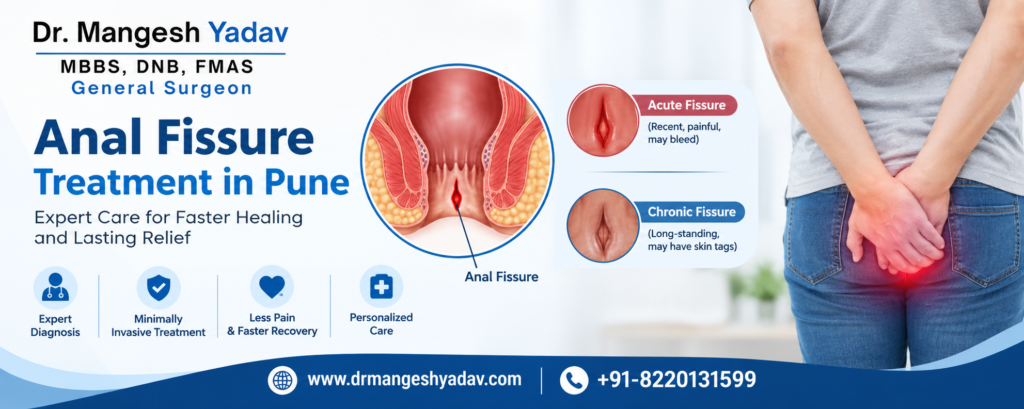
An anal fissure is a small tear in the thin skin lining the anal canal. It usually happens after passing a hard stool, though chronic constipation, diarrhoea, and childbirth can also trigger it.
The tear itself is tiny. The pain is not. That’s because the anal sphincter muscle spasms after the injury, which pulls the tear open and cuts off blood supply to the area. The wound struggles to heal.
Common symptoms include:
- Sharp or cutting pain during and after a bowel movement
- Bright red blood on tissue or the stool surface
- Burning or throbbing that lasts minutes to hours
- A visible crack, a small skin tag, or a lump near the opening
- Fear of passing stool, which worsens constipation
Acute vs. Chronic Fissure
An acute fissure is recent and often heals within a few weeks with simple care.
A chronic fissure has lasted more than six to eight weeks. It tends to have deeper edges, may show a skin tag at the outer end, and rarely heals on its own. This is the group that most often needs a procedure.
Is It a Fissure, Piles, or Something Else?
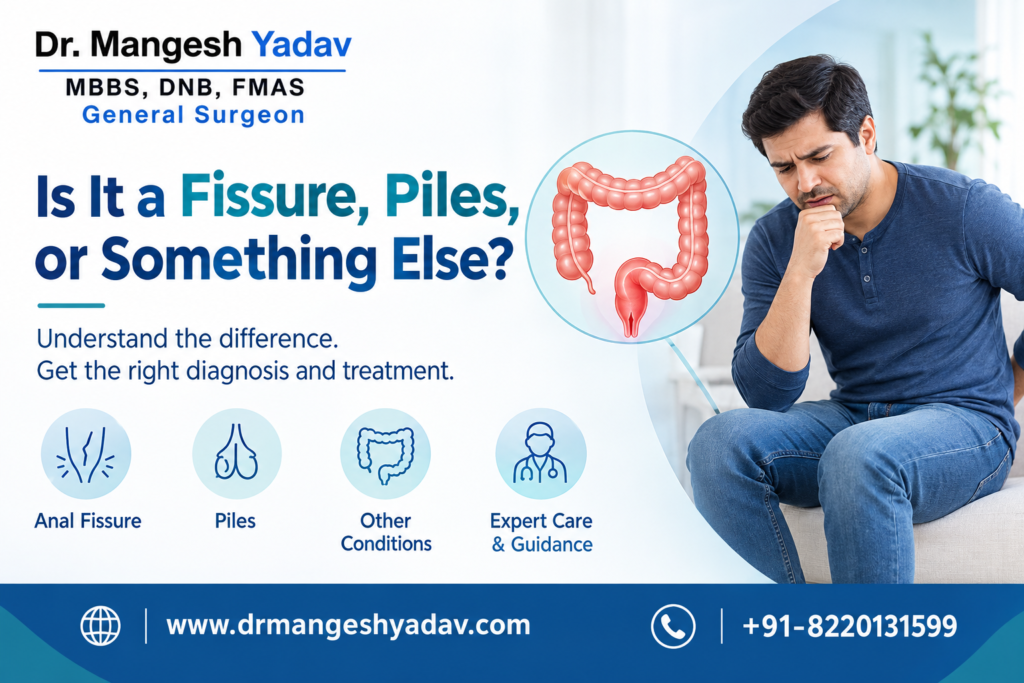
Fissures, piles, and fistulas share symptoms such as bleeding and anal discomfort, but they are different problems. Pain that spikes during the bowel movement and lingers afterwards points toward a fissure. Painless bleeding with a soft swelling often points toward piles. Persistent discharge or a recurring boil near the anus can signal a fistula.
For a side-by-side comparison, read Piles vs Fissure: Life After Surgery, Diet & Habit Changes to Prevent Recurrence. You can also read about piles treatment in Hadapsar, Pune and anal fistula treatment in Hadapsar, Pune. A proper examination is the only reliable way to tell them apart.
Do You Always Need Treatment Beyond Medicines?
No. Most fissures should start with conservative care, and many people never need anything more.
First-line options usually include:
- More fibre and plenty of water
- Warm sitz baths for 10–15 minutes, a few times a day
- Stool softeners prescribed by your doctor
- Prescription ointments that relax the sphincter muscle
If these don’t work, doctors sometimes suggest anal fissure injections (botulinum toxin) to relax the muscle temporarily. Results vary, and symptoms can return once the effect wears off.
When the fissure is chronic, or pain keeps returning, a procedure becomes the practical next step.
What Is Laser Anal Fissure Treatment?
Laser anal fissure treatment uses a focused laser fibre to treat the fissure and, in most techniques, to release a small portion of the tight sphincter muscle. The goal is the same as traditional surgery: reduce the spasm so blood flow returns and the tear can heal.
The laser replaces the surgical blade or cautery. It doesn’t change the principle.
How It Differs From Conventional Surgery
The established surgical standard is lateral internal sphincterotomy, done with a scalpel. Laser techniques perform a similar muscle release using laser energy.
Possible advantages people report:
- Smaller wound and less bleeding during the procedure
- Often done as a day-care procedure
- Quicker return to routine for many patients
Worth knowing: published research doesn’t show laser to be clearly better than conventional surgery for every patient. Outcomes depend heavily on the surgeon’s experience, correct patient selection, and your aftercare. Be cautious of any clinic that promises “100% painless” or “zero recurrence.”
Who Is a Good Candidate?
Laser treatment is usually considered when:
- The fissure has lasted more than 6–8 weeks
- Medicines and diet changes haven’t worked
- Pain is severe or keeps returning
- Sphincter spasm is clearly the main problem
It may not be suitable if another condition is behind your symptoms. Fissures in unusual positions, or ones that fail to heal, can point to Crohn’s disease, infection, or other causes. These need a proper work-up first. Related conditions are grouped under anorectal disorders.
How the Procedure Works, Step by Step
The exact steps vary by surgeon, but a typical day-care procedure looks like this:
- Consultation and examination. The doctor will confirm the diagnosis, check for piles or fistula, and review your medical history.
- Pre-procedure instructions. You may be asked to fast for a few hours. Tell the doctor about any blood thinners and other medicines.
- Anaesthesia. Usually spinal, regional, or short general anaesthesia. You won’t feel the procedure.
- Laser treatment. The surgeon treats the fissure and releases part of the sphincter muscle. Any associated skin tags or sentinel pile may be treated at the same time.
- Observation. You rest for a few hours and go home the same day, in most cases.
The procedure often takes about 15 to 30 minutes.
Recovery: What to Expect
Recovery is usually smoother than people fear, though it isn’t instant.
First Few Days
- Mild soreness and some spotting are common
- Many people return to desk work within 2 to 3 days
- Avoid heavy lifting and long bike rides for a while
First 2 to 4 Weeks
The wound continues to heal in this period. You may see small amounts of discharge or blood on occasion.
Aftercare that makes a real difference:
- Take prescribed medicines on schedule
- Do sitz baths as advised
- Eat fibre-rich food: vegetables, fruit, whole grains, dal
- Drink enough water through the day
- Don’t strain, and don’t ignore the urge to go
Risks and Possible Complications
Every procedure has risks. A good surgeon will discuss them openly.
- Temporary difficulty controlling gas and, rarely, stool leakage
- Bleeding or infection at the site
- Recurrence, especially if constipation returns
- Delayed healing in people with diabetes or other conditions
The risk of serious incontinence is low when the procedure is done carefully, but it is not zero. That’s one reason surgeon experience matters.
Laser Anal Fissure Treatment Cost in Pune
There’s no single fixed price. In Pune, the total commonly falls somewhere in the range of ₹25,000 to ₹70,000, but this is only a rough guide. Please confirm the figure directly with your clinic before deciding.
What affects the cost:
- Hospital or day-care centre and room category
- Type of anaesthesia
- Whether other conditions (piles, fistula, skin tag) are treated together
- Surgeon’s experience and the laser equipment used
- Tests, medicines, and follow-up visits
Does insurance cover it? Many health insurance policies cover anal fissure surgery when it’s medically necessary, but waiting periods and terms differ. Ask your insurer and the hospital’s insurance desk before admission.
Tip: ask for an itemised estimate. It should list the procedure, hospital charges, anaesthesia, and follow-up.
For a worked example of how surgical costs and coverage are explained for a related anorectal condition, read Fistula Surgery Cost in Pune: What’s Covered, What’s Not.
How to Choose the Right Doctor in Pune
The laser matters less than the person using it. Look for:
- A qualified general surgeon or colorectal specialist with regular experience in anorectal procedures
- A clear diagnosis before any procedure is recommended
- Willingness to discuss non-surgical options and risks
- Transparent pricing and a defined follow-up plan
- Honest answers about recurrence, not guarantees
If one doctor recommends surgery right away without examining you properly, a second opinion is reasonable.
When to See a Doctor Soon
Don’t wait it out if you notice:
- Pain lasting beyond a couple of weeks
- Repeated bleeding
- Heavy bleeding, black stools, or dizziness
- Unexplained weight loss or a change in bowel habits
Dr. Mangesh Yadav, a general and laparoscopic surgeon in Hadapsar, evaluates anorectal conditions including fissure, piles, and fistula. You can read about anal fissure treatment in Hadapsar, Pune or book a consultation. If any doctor recommends surgery without a proper examination, a second opinion is reasonable.
Conclusion
An anal fissure is common, treatable, and nothing to be embarrassed about. Start with fibre, water, and sitz baths. If a fissure lingers past six to eight weeks, laser anal fissure treatment in Pune is one effective option, alongside conventional surgery.
Choose the surgeon first, then the technique. Ask about risks, cost, and aftercare before you commit.
Related Articles
If you want to read more before your consultation, these guides from the same clinic may help:
- Piles vs Fissure: Life After Surgery, Diet & Habit Changes to Prevent Recurrence: how to tell the two conditions apart and what to change in daily habits after surgery.
- Fistula Surgery Cost in Pune: What’s Covered, What’s Not: a practical look at surgical costs and insurance for a related anorectal condition.
- Appendicitis Warning Signs: When Abdominal Pain Is a Surgical Emergency: useful if your pain is in the abdomen rather than the anal area.
- Robotic Gallbladder Surgery in Pune: How the SSI Mantra 3.0 System Changes Recovery: see how minimally invasive surgery affects pain and recovery time.
Frequently Asked Questions
Is laser treatment for anal fissure painful?
You’re under anaesthesia during the procedure. Afterwards, most people report mild to moderate discomfort that medicines control well.
How long does laser anal fissure treatment take?
The procedure itself usually takes about 15 to 30 minutes. You typically go home the same day.
Can an anal fissure come back after laser treatment?
Yes, it can. Constipation and straining are the main triggers. Good diet, hydration, and follow-up lower the risk.
Is laser better than injections?
They work differently. Injections relax the muscle temporarily, while a procedure releases it more lastingly. The right choice depends on how long you’ve had the fissure and what you’ve already tried.
Does insurance cover the treatment?
Often yes, when medically necessary. Check your policy terms with your insurer.