
Piles vs Fissure | Life After Surgery, Diet & Habit Changes to Prevent Recurrence
- Home
- Hernia Care
- Piles vs Fissure | Life After Surgery, Diet & Habit Changes to Prevent Recurrence
Piles vs Fissure | Life After Surgery, Diet & Habit Changes to Prevent Recurrence
Written & Medically Reviewed By:
Dr. Mangesh Yadav
General, Laparoscopic & Robotic Surgeon
15+ Years of Surgical Experience
6,000+ Piles Cases Treated
Table of Contents
Rectal bleeding and pain during bowel movements worry almost everyone. Many people assume it is piles, but it can just as easily be a fissure, and the two need different care. Knowing the difference between piles and fissure helps you get the right treatment sooner.
This guide explains piles vs fissure, the key symptoms of each, what recovery looks like after surgery, and the exact diet and habit changes that lower the chance of recurrence. It draws on the clinical experience of Dr. Mangesh Yadav, a general and laparoscopic surgeon in Hadapsar with over 15 years of surgical practice.
Not all stomach aches are harmless. Sometimes, pain that starts as a dull ache near the belly button can be your body’s first signal of a medical emergency. Appendicitis, an inflammation of the appendix, can progress from mild discomfort to a life-threatening rupture within 24 to 72 hours if left untreated.
Because early symptoms often mimic gas, indigestion, or a stomach bug, many people delay seeking care until the pain becomes severe. This guide walks you through the appendicitis warning signs, how symptoms differ between men and women, what causes appendicitis, and when abdominal pain crosses the line from “wait and see” to “go to the ER now.” Written with input from practicing surgical experts, this article is designed to help you recognize the difference between ordinary stomach pain and a true surgical emergency.
Overview
Piles and fissures are different anal conditions, but both can cause pain, bleeding, and discomfort. After surgery, recovery depends on a high-fiber diet, adequate hydration, regular bowel movements, proper hygiene, and avoiding straining. Maintaining healthy bowel habits, staying physically active, and following your surgeon’s advice can help reduce the risk of recurrence.
Piles vs Fissure: What Is the Difference?
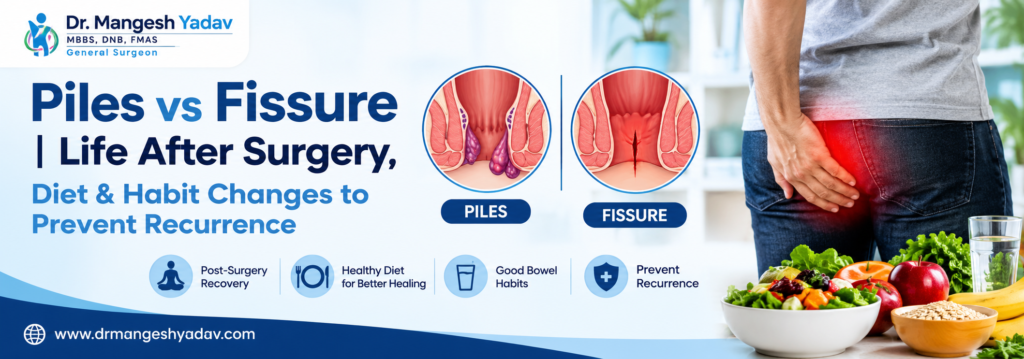
The difference between piles and fissure comes down to structure. Piles are swollen blood vessel cushions inside or around the anus. A fissure is a small tear in the skin lining the anal canal. Both cause bleeding and discomfort, so they are easily confused, but they behave differently.
Piles Symptoms
Common piles symptoms include:
- Bright red blood on the tissue or in the toilet bowl, often painless
- A soft lump or swelling near the anus
- Itching, irritation, or a feeling of fullness after passing stool
- Mucus discharge
- Tissue that slips out during motions (prolapse) in advanced stages
Pain is usually mild unless a clot forms inside an external pile.
Fissure Symptoms
Common fissure symptoms include:
- Sharp, cutting pain during a bowel movement
- Burning or throbbing pain that lasts from minutes to several hours afterward
- A small streak of fresh blood on the tissue
- Tight anal muscles that spasm
- A small skin tag near the tear in chronic cases
Fear of pain often makes people hold back stool, which makes constipation and the fissure worse.
Piles vs Fissure at a Glance
Feature | Piles | Fissure |
What it is | Swollen veins and cushions | Tear in anal lining |
Main sign | Painless bleeding, lump | Sharp pain with stool |
Bleeding | Often more visible | Usually a small streak |
Lump | Common | Rare (skin tag only) |
Main cause | Straining, pressure | Hard stool, trauma |
The symptoms of fissure and piles overlap, so a clinical examination is the only reliable way to tell them apart. Both conditions can also occur together.
Are Piles and Hemorrhoids the Same?
Yes. Many patients ask about the difference between piles and hemorrhoids, and there is none. Hemorrhoids is the medical term, while piles is the everyday word. Both refer to the same swollen anal cushions. In India, you may also hear the term arsh or mulvyadh.
When Is Surgery Needed?
Early piles and fissures often settle with fiber, fluids, and medication. Surgery becomes the better option when:
- Symptoms return again and again despite treatment
- Piles are large or keep prolapsing
- A fissure has become chronic, meaning it has lasted more than six to eight weeks
- Bleeding leads to weakness or anemia
Dr. Yadav uses minimally invasive and laser techniques wherever suitable. These approaches usually mean smaller wounds, less pain, and a faster return to normal life.
Life After Piles Surgery
Recovery varies with the procedure and the grade of piles. Here is what most patients can expect.
The First Week
- Mild to moderate discomfort, managed with prescribed medicines
- Small amounts of blood or discharge during the first few motions
- Warm sitz baths two to three times a day to soothe the area
- A soft, high-fiber diet from the very first day
Weeks Two to Four
Most patients return to desk work within one to two weeks. Heavy lifting and long, strenuous travel are best delayed until your surgeon clears you. Full healing of the internal wound continues for a few weeks, so diet and habit discipline matter even after the pain settles.
Life After Fissure Surgery
Fissure procedures, such as lateral internal sphincterotomy or laser-assisted surgery, are designed to relax the tight muscle and let the tear heal.
- Pain relief from the spasm is often noticeable within days
- Mild bleeding may occur for a short time
- Sitz baths and stool softeners help the wound heal cleanly
- Most people resume normal routines within a week or two
Fissure recovery is often quicker than piles recovery, but the same rule applies: soft stool is the best medicine.
Doctor’s tip: Never skip your follow-up visit. A quick check confirms healing and lets us correct habits early, before a problem returns.
Diet Chart for Piles Patient
A good piles diet chart aims for 25 to 30 grams of fiber daily and enough water to keep stool soft. This diet chart for piles patient advice works equally well after fissure surgery.
Sample One-Day Diet Plan
Meal | What to Eat |
Early morning | Warm water, soaked raisins or 4 to 5 soaked almonds |
Breakfast | Vegetable oats, daliya, or whole wheat roti with vegetables, plus a fruit |
Mid-morning | Papaya, banana, or a glass of buttermilk |
Lunch | Whole wheat roti, dal, cooked seasonal vegetables, salad, curd |
Evening | Coconut water or a fruit bowl |
Dinner | Light khichdi, vegetable soup, or roti with lauki or tori |
Bedtime | A glass of warm water; a spoon of isabgol (psyllium husk) if advised |
Foods That Help
- Whole grains such as oats, daliya, and brown rice
- Green leafy vegetables, beans, and lentils
- Fruits like papaya, pear, apple, and guava
- Curd and buttermilk for gut health
- Two to three liters of water daily, unless a doctor has limited your fluids
7-Day Diet Chart for Piles and Fissure Patients
This plan works for piles diet chart searches and for recovery after piles or fissure surgery. It aims for 25 to 30 grams of fiber and 2 to 3 liters of water daily. It is a general plan, so follow your surgeon’s advice on timing after surgery.
Daily Routine (Same Every Day)
Time | What to Follow |
Early morning | 1 to 2 glasses of warm water, 4 to 5 soaked raisins or 4 to 5 soaked almonds |
Mid-morning | 1 fruit (papaya, banana, pear or apple) or 1 glass of buttermilk |
Evening | Coconut water or a fruit bowl, plus 1 handful of roasted chana |
Bedtime | 1 glass of warm water; 1 tsp isabgol (psyllium husk) only if your doctor advises |
Day-Wise Meal Plan
Day | Breakfast | Lunch | Dinner |
Day 1 | Vegetable oats with 1 fruit | 2 whole wheat rotis, moong dal, lauki sabzi, salad, curd | Vegetable khichdi with a bowl of soup |
Day 2 | Daliya upma with vegetables | 2 rotis, rajma or chana, cucumber and carrot salad, buttermilk | 2 rotis with tori or parwal sabzi |
Day 3 | Vegetable poha with a banana | Brown rice, toor dal, palak sabzi, curd | Moong dal cheela with mint chutney |
Day 4 | 2 vegetable besan cheelas with curd | 2 rotis, mixed dal, bhindi or beans sabzi, salad | Vegetable daliya or light khichdi |
Day 5 | Ragi porridge with chopped papaya | 2 rotis, chole, cabbage sabzi, buttermilk | 2 rotis with lauki or pumpkin sabzi, soup |
Day 6 | Oats idli or vegetable idli with sambar | Brown rice, masoor dal, methi sabzi, salad, curd | Vegetable soup with 2 multigrain rotis |
Day 7 | Sprouts salad with 1 whole wheat toast | 2 rotis, dal, mixed vegetable sabzi, curd | Light khichdi with ghiya raita |
Foods to Eat Every Day
- At least 2 to 3 servings of vegetables, including leafy greens
- 2 servings of fruit
- Whole grains such as wheat, oats, daliya, ragi, and brown rice
- Dal and sprouts for protein and fiber
- 1 bowl of curd or 1 glass of buttermilk
- 2 to 3 liters of water, unless a doctor has limited your fluids
Foods to Avoid or Limit
- Very spicy, oily and fried food
- Maida products, bakery items, white bread and biscuits
- Excess red meat and heavy non-veg gravies
- Alcohol, and too much tea or coffee
- Packaged and processed snacks
- Raw onion-heavy or gas-forming foods in large amounts, if they upset you
Habits to Follow Along With the Diet
- Eat at fixed times and do not skip meals.
- Chew slowly and do not overeat at dinner.
- Sip water through the day instead of drinking it all at once.
- Walk for 20 to 30 minutes after dinner.
- Go to the toilet when you feel the urge, and do not strain.
- Take warm sitz baths 2 to 3 times a day if advised, especially in the first week after surgery.
Important Tips
- Increase fiber slowly. A sudden jump can cause gas and bloating.
- Right after surgery, your doctor may ask for softer, lighter meals in the first 1 to 2 days. Follow that first, then move to this plan.
- Diabetes, kidney or heart conditions need a personalized plan, so check with your doctor before changing your diet.
Foods to Limit
- Very spicy, oily, and fried food
- Refined flour (maida) and bakery items
- Excess red meat
- Alcohol and too much tea or coffee
- Processed snacks with little fiber
Increase fiber gradually. Adding it too fast can cause gas and bloating.
Habit Changes to Prevent Recurrence
Diet is only half the story. These daily habits protect you from a second round of piles and fissures.
Fix Your Toilet Habits
- Go when you feel the urge; do not hold it in
- Limit toilet time to five minutes
- Leave the phone outside the bathroom
- Never strain or push hard
- Use a low footstool so your knees sit above your hips
Stay Active
- Walk for 30 minutes daily
- Avoid sitting for hours without a break
- Maintain a healthy weight
- Be careful with very heavy lifting
Keep the Area Clean
- Wash gently with warm water after each motion
- Pat dry rather than rubbing
- Avoid harsh soaps and scented wipes
Manage Long-Term Triggers
Chronic constipation, pregnancy, obesity, and long sitting hours all raise the risk. Treating constipation early is the single most effective step. If natural methods fail, ask your doctor about a safe stool softener rather than self-medicating.
When to See a Doctor
Do not ignore these signs:
- Bleeding that continues for more than a few days
- Severe or worsening pain
- A lump that cannot be pushed back or turns very painful
- Fever, pus, or foul discharge after surgery
- Dizziness or weakness from blood loss
Bleeding is not always piles or fissure. A proper examination rules out other causes and prevents delays in care.
Why Patients Trust Dr. Mangesh Yadav
Choosing the right surgeon shapes both safety and recovery. Dr. Mangesh Yadav holds an MBBS and DNB in General Surgery, along with an FMAS (Fellowship in Minimal Access Surgery). With more than 15 years of dedicated surgical practice, he has treated thousands of patients with abdominal, gastrointestinal, and anorectal conditions, including over 6000 piles cases.
His approach is simple and honest:
- A careful diagnosis before any treatment decision
- Surgery only when it is truly needed
- Minimally invasive techniques for less pain and faster recovery
- Clear diet and follow-up guidance so results last
He is associated with VishwaRaj Hospital Pune, a leading multispecialty hospital equipped with modern surgical infrastructure. If you are searching for a trusted general surgeon near you, you can learn more about his practice at Dr. Mangesh Yadav’s
Related Reading
Frequently Asked Questions
What is the main difference between piles and fissure?
Piles are swollen blood vessel cushions, while a fissure is a tear in the anal skin. Piles often cause painless bleeding and lumps; a fissure causes sharp pain during stool.
Are piles and hemorrhoids the same?
Yes. Hemorrhoids is the medical term for piles
Can piles and fissure occur together?
Yes. Constipation and straining can trigger both at the same time.
Which is more painful, piles or fissure?
A fissure is usually more painful, especially during and after passing stool.
How long is recovery after piles surgery?
Yes, appendicitis in children is common, especially in teenagers. Young children may have more difficulty describing pain location and are more prone to rapid progression toward rupture, so any persistent abdominal pain with fever in a child warrants prompt medical attention.
How long does it take to recover from fissure surgery?
Pain relief often begins within days, and daily activities resume in about one to two weeks.
What should I eat after piles surgery?
Choose high-fiber, soft foods such as oats, vegetables, fruit, dal, and curd, plus plenty of water
Can piles or fissure come back after surgery?
Recurrence is possible if constipation, straining, and low-fiber eating continue. Good diet and toilet habits greatly reduce the risk.
Is a piles diet chart enough to cure piles?
Diet can control early piles and prevent relapse, but advanced piles usually need a medical or surgical procedure.
Need Help? We’ve Got You Covered
Contact Details
Clinic Address
Vishwaraj Hospital, Pune Solapur Road, Loni Kalbhor, Pune 412201
Monday To Saturday: 03.00 PM to 05.00 PM / 07.00 PM to 08.30 PM
Sunday: 10.30 AM to 01.00 PM