
Sudden Lower Right Abdominal Pain? Emergency Appendicitis Treatment in Hadapsar
- Home
- Hernia Care
- Sudden Lower Right Abdominal Pain? Emergency Appendicitis Treatment in Hadapsar
Sudden Lower Right Abdominal Pain? Emergency Appendicitis Treatment in Hadapsar
Quick Treatment Guide — Emergency Appendicitis Treatment in Hadapsar
Q: What are the first warning signs of appendicitis?
Pain that begins near the navel and migrates to the lower right abdomen within hours — accompanied by nausea, vomiting, and low-grade fever — is the classic appendicitis presentation. Pain that worsens with movement, coughing, or pressure on the lower right side is a red-flag emergency requiring immediate Appendicitis Treatment in Hadapsar.
Q: How quickly can an appendix rupture after symptoms begin?
A ruptured appendix can occur within 24–72 hours of the first symptom. In some patients — particularly children and elderly — rupture can happen faster. Every hour of delay after symptom onset increases the rupture risk. Do not wait for the pain to pass on its own.
Q: Is laparoscopic appendix surgery available as emergency treatment in Hadapsar?
Yes. Dr. Mangesh Yadav performs emergency laparoscopic appendectomy at Vishwaraj Hospital, Hadapsar. Most uncomplicated cases are diagnosed and operated within 2–3 hours of arrival. Laparoscopic surgery means smaller incisions, less pain, and discharge within 24–48 hours.
Q: How soon can a corporate professional return to desk work after appendix surgery?
Most IT and office professionals return to light desk work and remote working within 5–7 days after laparoscopic appendectomy. Full physical activity resumes in 2–3 weeks. This is significantly faster than open surgery, which requires 3–4 weeks of recovery.
Q: What is the cost of appendix surgery in Hadapsar?
Laparoscopic appendectomy at Vishwaraj Hospital costs approximately ₹45,000–₹90,000 all-inclusive. Most Mediclaim and corporate insurance policies cover appendicitis surgery. The billing team processes cashless claims directly with your insurer.
Appendicitis Treatment in Hadapsar is, above all else, a race against time. The lower right abdominal pain that began a few hours ago — the one you assumed was a pulled muscle, trapped gas, or something you ate — may be your appendix in the early stages of a crisis that will not wait for a convenient appointment time.
Every year, patients across Pune delay seeking emergency care for appendicitis because the early symptoms are easy to dismiss. And every year, a percentage of those patients arrive at the hospital not for a simple 45-minute laparoscopic procedure, but for complex emergency surgery to manage a ruptured appendix and its life-threatening consequences.
This article is your clinical guide to recognising the difference between ordinary abdominal discomfort and a genuine surgical emergency

What Are the Emergency Symptoms That Dictate Immediate Appendicitis Treatment in Hadapsar?
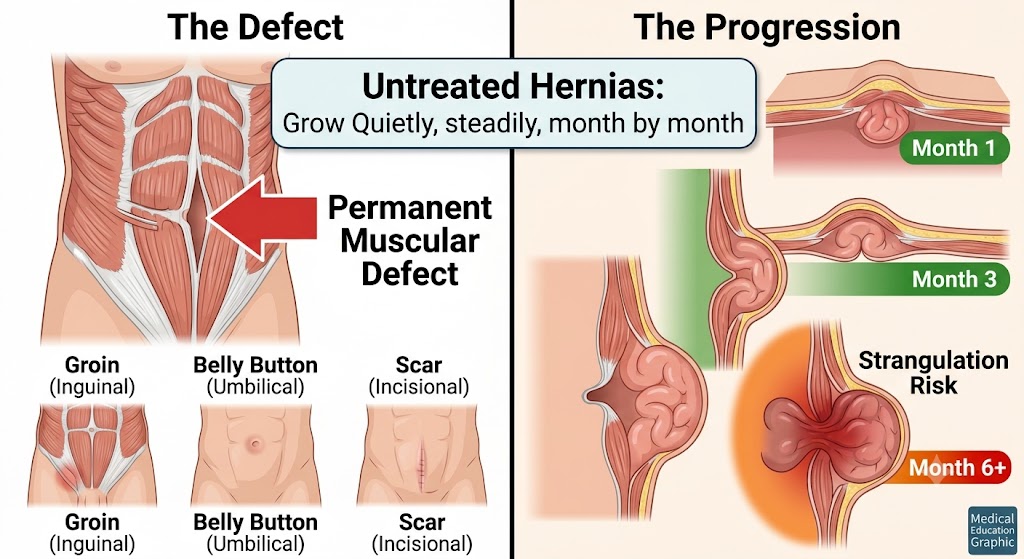
The red-flag symptoms of appendicitis are a specific, recognisable constellation — and when three or more appear together, immediate Appendicitis Treatment in Hadapsar is not optional. Every hour between symptom recognition and surgical intervention matters enormously in determining whether the procedure is a simple 45-minute keyhole surgery or a complex emergency operation.
The Classic Symptom Progression — Hour by Hour
Appendicitis does not typically arrive as a sudden, overwhelming pain. It builds through a recognisable sequence:
Hours 1–6 — Periumbilical Pain (Around the Navel) The initial pain of appendicitis is poorly localised — felt as a dull, cramping ache centred around the belly button. Many patients mistake this for indigestion, gas, or gastroenteritis. Nausea begins. Appetite disappears completely.
Hours 6–12 — Migration to the Lower Right Abdomen This is the defining clinical event. The pain migrates from the navel and settles in the lower right quadrant of the abdomen — at a point called McBurney’s point, two-thirds of the way from the navel to the right hip bone. The character changes from dull cramping to a sharper, more persistent pain.
Hours 12–24 — Escalation and Red-Flag Signs The pain intensifies. Fever develops — initially low-grade (99–100°F), but rising as inflammation progresses. Movement, coughing, and deep breathing aggravate the pain. The abdomen becomes tender to touch. Vomiting may begin.
Beyond 24 Hours — Rupture Risk Zone Every hour beyond 24 hours carries escalating rupture risk. Some patients experience a brief period of apparent pain relief just before rupture — as pressure in the appendix temporarily equalises. This false improvement is dangerous. It is not recovery. It is a warning sign.
The Seven Red-Flag Signs — Act on Any Three
If you or a family member has any combination of three or more of these signs — go to Vishwaraj Hospital immediately. Do not eat or drink. Do not take painkillers (they mask symptoms and delay diagnosis):
Red Flag 1 — Migrating Pain Pain that started near the navel and has now settled firmly in the lower right abdomen
Red Flag 2 — Rebound Tenderness Press firmly on the lower right abdomen and release suddenly — if the release causes sharp, intense pain (rebound tenderness), this is a classic surgical sign of peritoneal inflammation
Red Flag 3 — Fever Above 38°C (100.4°F) Low-grade fever accompanying abdominal pain is not flu — it is infection
Red Flag 4 — Rigidity The abdominal muscles become involuntarily rigid when the lower right area is touched — a sign the body is trying to guard the inflamed organ
Red Flag 5 — Pain Worsening With Every Movement Walking makes it worse. Coughing makes it worse. Lying completely still is the only position of relative comfort
Red Flag 6 — Complete Loss of Appetite Sudden, total loss of appetite accompanying abdominal pain is a classic appendicitis accompaniment — distinct from the appetite suppression of ordinary stomach upset
Red Flag 7 — Inability to Stand Straight Patients with significant appendiceal inflammation typically walk bent forward — unable to fully extend the torso due to peritoneal irritation
Why These Symptoms Are Easy to Miss
According to Mayo Clinic, appendicitis symptoms overlap significantly with other abdominal conditions — including gastroenteritis, ovarian cysts in women, urinary tract infections, and irritable bowel syndrome. This overlap is precisely why clinical examination and blood tests are essential, and why patients should never attempt to self-diagnose and manage appendicitis symptoms at home.
For more on abdominal emergency conditions and their management, read our complete guide: Appendicitis in Children — Symptoms, Causes & Best Treatment.
Why Is a Ruptured Appendix Considered a Life-Threatening Clinical Emergency?
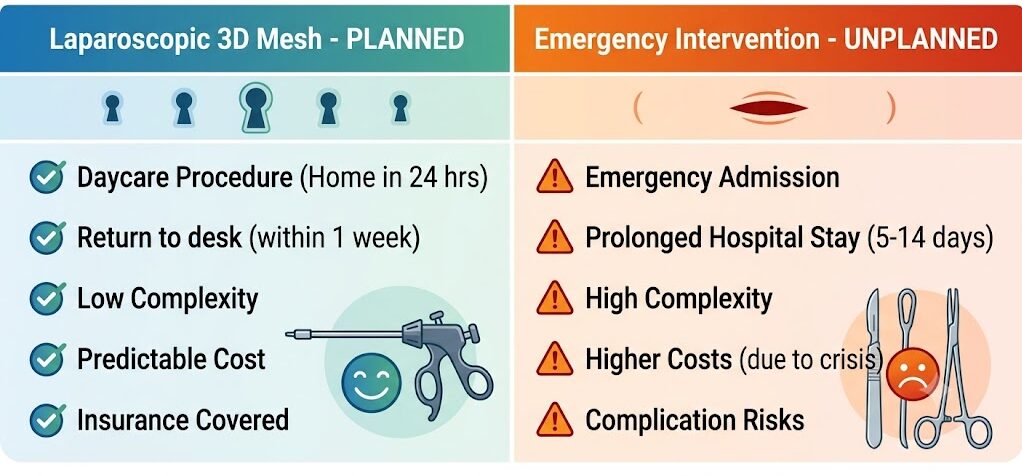
A ruptured appendix is one of the most serious abdominal emergencies in general surgery — transforming a condition that takes 45 minutes to fix into a crisis that may require hours of surgery, days in the ICU, and weeks of recovery. Understanding the exact clinical sequence of a rupture explains why every hour of delay in seeking Appendicitis Treatment in Hadapsar carries genuine, escalating risk.
What Happens Inside the Appendix Before Rupture
The appendix is a small, finger-shaped pouch attached to the large intestine. When it becomes blocked — by hardened stool, mucus, or lymph node swelling from infection — bacteria that normally inhabit the colon multiply rapidly inside the obstructed appendix. Within hours, the appendix fills with pus under increasing pressure.
The wall of the appendix begins to break down as inflammation progresses. Blood vessels in the appendix wall are compressed, reducing blood flow and causing tissue ischemia (oxygen deprivation). The weakened wall eventually perforates — and when it does, pus and faecal bacteria spill directly into the sterile peritoneal cavity (the space surrounding the abdominal organs).
The Four-Stage Rupture Cascade
Stage 1 — Localised Peritonitis Immediately after rupture, inflammation is contained locally. The body attempts to wall off the infection with surrounding tissue and fat. Pain intensifies and fever spikes. A peri-appendiceal abscess may form.
Stage 2 — Generalised Peritonitis If the localised containment fails — either because the infection is too aggressive or treatment is too delayed — bacteria spread throughout the peritoneal cavity. The entire abdomen becomes rigid, exquisitely tender, and the patient appears severely unwell.
Stage 3 — Sepsis Bacteria enter the bloodstream. The patient develops sepsis — a systemic inflammatory response with high fever, rapid heart rate, low blood pressure, and confusion. Sepsis carries a mortality rate of 15–30% without intensive treatment.
Stage 4 — Multi-Organ Dysfunction In the most severe cases, uncontrolled sepsis leads to multi-organ failure — kidneys, lungs, and liver simultaneously failing under the systemic infection load. This requires ICU management and carries the highest mortality.
The Clinical and Cost Consequences of Rupture
The difference between a patient who reaches Vishwaraj Hospital in the first 24 hours and one who arrives after rupture is dramatic — in every measurable dimension:
| Unruptured Appendix | Ruptured Appendix | |
|---|---|---|
| Surgery type | Laparoscopic | Often open/complex |
| Operative time | 30–45 minutes | 90–180 minutes |
| Hospital stay | 1–2 days | 5–14 days |
| ICU requirement | Rare | Common in severe cases |
| IV antibiotics | 24 hours | 7–14 days |
| Complication risk | Under 3% | 25–40% |
| Return to work | 5–7 days | 4–8 weeks |
| Surgery cost | ₹45,000–₹90,000 | ₹1,50,000–₹5,00,000+ |
The National Institutes of Health (NIH) confirms that laparoscopic appendectomy for unruptured appendicitis has a complication rate under 3% and a hospital stay of 1–2 days — versus significantly higher rates in ruptured cases requiring open surgery and prolonged hospitalisation.
What Happens When You Arrive at Vishwaraj Hospital
Dr. Mangesh Yadav’s emergency appendicitis protocol is designed for speed — because speed is the variable that determines outcome:
On Arrival: Triage, vital signs, clinical examination Within 30 Minutes: Blood tests (CBC — elevated WBC confirms infection), urine test, IV access established Within 1 Hour: Ultrasound abdomen performed — visualises inflamed appendix in most cases Within 2 Hours: CT scan if ultrasound inconclusive — provides definitive diagnosis Within 3 Hours: Operating theatre preparation and surgery begin for confirmed cases
Most patients with uncomplicated appendicitis are in the operating theatre within 2–3 hours of walking through the door.
How Fast Can a Corporate Professional Return to Light Work After Laparoscopic Appendectomy for Appendicitis Treatment in Hadapsar?
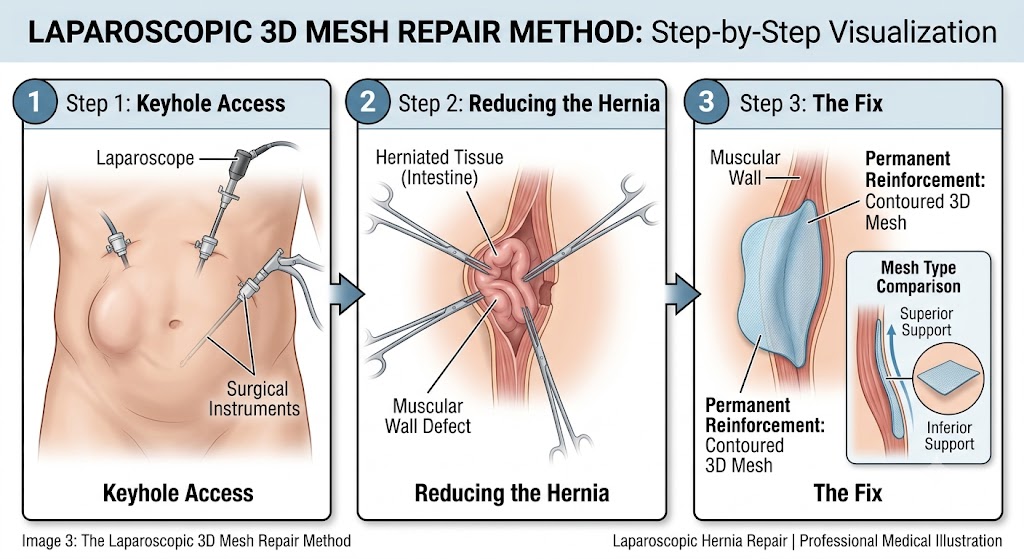
A corporate professional — IT worker, consultant, manager, or desk-based executive — can typically return to light work and remote working within 5–7 days after laparoscopic appendectomy for Appendicitis Treatment in Hadapsar. This timeline is specific, realistic, and based on Dr. Mangesh Yadav’s experience with hundreds of working-age patients at Vishwaraj Hospital.
The Complete Corporate Recovery Timeline
Day of Surgery: Laparoscopic appendectomy under general anaesthesia. 3 pinhole incisions. Operative time 30–45 minutes. Recovery room for 2–3 hours. Discharge the same evening or next morning depending on the time of surgery and post-operative status.
Day 1–2 (Home Rest): Mild soreness at the 3 incision sites — managed with prescribed pain relief. Fatigue from anaesthesia. Rest at home. Light liquids and soft food. Short, slow walks around the home are encouraged — immobility increases clot risk. No screens, no work.
Day 3–4 (Light Recovery): Energy begins returning. Most patients are off all prescription painkillers by Day 3–4, managing with paracetamol if needed. Reading, light phone use, and brief video calls are comfortable. Driving is not yet advisable.
Day 5–7 (Return to Remote Work): This is the window when most corporate professionals return to remote working. Sitting at a desk or laptop for 4–6 hours is comfortable. Email, calls, and screen work are all manageable. Commuting to office may be possible from Day 7 for those with comfortable transport arrangements.
Day 7–10 (Follow-Up): Follow-up consultation with Dr. Mangesh Yadav at Vishwaraj Hospital. Incision sites are assessed. Activity clearance is confirmed. Most patients receive clearance for office commuting and normal daily activity at this visit.
Week 2–3 (Near-Normal Function): Office attendance is fully comfortable. Light exercise — walking, cycling — can resume. Gym work and moderate physical activity require clearance from Dr. Yadav.
Week 3–4 (Full Return): Complete return to all activities — including gym, running, sports, and physically demanding work. No restrictions remain for the vast majority of patients.
Corporate-Specific Recovery Considerations
For IT professionals with long sitting hours: A lumbar support cushion for the first week of desk work reduces abdominal muscle strain. Take standing breaks every 60–90 minutes. Laptop working from a recliner or bed in the first 2 days of remote work is more comfortable than a rigid desk chair.
For frequent travellers and those with client commitments: Air travel is generally safe from Day 10–14 for short-haul flights. Long-haul international travel should wait until Week 3 to reduce DVT risk. Client-facing meetings and presentations are comfortable from Day 7 in most cases.
For those in high-stress, deadline-driven roles: Anaesthesia and surgery have a genuine fatigue effect for 5–7 days. Cognitive performance — concentration, memory, decision speed — may be marginally reduced in the first week. Plan for light workload in the first 3–4 days of remote work return.
Appendicitis Treatment Cost in Hadapsar Pune
| Component | Approximate Cost |
|---|---|
| Emergency Consultation & Examination | ₹500 – ₹1,500 |
| Blood Tests + Ultrasound / CT Scan | ₹2,000 – ₹6,000 |
| Laparoscopic Appendectomy (all-inclusive) | ₹45,000 – ₹90,000 |
| Hospital Stay (1–2 nights) | Included in package |
| Post-Discharge Medicines & Follow-Up | ₹1,500 – ₹3,000 |
Package includes: Anaesthesia, laparoscopic procedure, hospital stay, nursing, meals, and one follow-up. Zero hidden charges.
Why cost varies: Whether appendix has ruptured, duration of hospital stay, type of anaesthesia, and diagnostic investigations required.
Insurance: Most individual and corporate Mediclaim policies cover appendicitis surgery. The Vishwaraj Hospital billing team coordinates cashless claims directly. EMI available.
Why Choose Dr. Mangesh Yadav for Appendicitis Treatment in Hadapsar?
1. Emergency-Ready — Always Appendicitis strikes without scheduling. Dr. Yadav and the Vishwaraj Hospital team are available for emergency cases — rapid diagnosis, immediate surgical intervention, no delay in critical hours.
2. Diagnosis to Operating Theatre in Under 3 Hours Speed is the most important variable in appendicitis outcomes. Dr. Yadav’s systematic emergency protocol moves patients from arrival to surgery faster than most standard hospital pathways.
3. Laparoscopic-First — Even in Emergencies Every eligible patient — even in emergency presentations — receives laparoscopic surgery where safe and feasible. Smaller incisions, faster recovery, and lower complication rates apply equally to emergency cases.
4. Corporate-Friendly Recovery Planning Dr. Yadav understands that working professionals have real professional commitments. Every post-operative plan includes a clear, personalised return-to-work timeline based on the patient’s job demands and recovery progress.
5. What Makes Us Different Most hospitals treat appendicitis. Dr. Mangesh Yadav provides emergency surgical speed, laparoscopic precision, transparent cost planning, corporate-calibrated recovery guidance, and genuine clinical communication — all from a specialist with 15+ years of experience managing exactly this emergency, right here in Hadapsar.
Frequently Asked Questions
How do I know it is appendicitis and not just gas pain?
Gas pain is diffuse, comes and goes, and usually settles within 1–2 hours. Appendicitis pain migrates from the navel to the lower right, intensifies continuously, worsens with movement, and is accompanied by nausea and fever. If lower right abdominal pain has been building for more than 4–6 hours — go to hospital immediately. Do not wait.
Can appendicitis be treated with antibiotics without surgery?
Can I get laparoscopic hernia surgery done as a daycare procedure?
Yes — in most uncomplicated laparoscopic hernia repairs, patients are discharged the same day or after one overnight stay. There is no requirement for extended hospital admission for straightforward cases.
Does hernia surgery hurt?
The procedure is performed under general anaesthesia — you feel nothing during surgery. Post-laparoscopic soreness at the 3 incision sites is mild and managed with simple prescribed pain relief. Most patients are off all painkillers by Day 5.
What is the recurrence rate after hernia surgery with 3D mesh?
The recurrence rate with 3D Mesh Laparoscopic repair is under 1% — extremely low compared to open repair without mesh (10–15%) or primary repair without mesh of any type. Following post-operative instructions and avoiding heavy lifting during the healing period further reduces this already minimal risk.
How is the Hernia Surgery cost in Pune calculated — is it fixed or variable?
The cost is variable based on hernia type, mesh choice, surgical approach, ward type, and investigations required. Dr. Yadav provides a complete cost estimate after the initial consultation and physical examination. There are no post-surgical surprise charges — everything discussed before surgery is what you pay.
Is robotic hernia surgery available at Vishwaraj Hospital?
Yes. Dr. Yadav performs robotic-assisted hernia repairs using the SSI Mantra 3.0 platform for complex or recurrent cases where robotic precision offers additional advantages. The robotic approach is recommended selectively — not for every case — based on clinical assessment.
How soon after diagnosis do I need to have the surgery?
For a simple reducible hernia without symptoms of strangulation, there is no absolute deadline — but delaying beyond a few months is not advisable because hernias enlarge and become more complex over time. For an irreducible or symptomatic hernia, surgery should be planned within weeks. For any sign of strangulation, go to hospital immediately.
Can I finance my hernia surgery through EMI?
Yes. EMI payment options are available at Vishwaraj Hospital for patients who need flexible payment plans. The billing team will explain available financing options during your consultation.
Need Help? We’ve Got You Covered
Contact Details
Clinic Address
Vishwaraj Hospital, Pune Solapur Road, Loni Kalbhor, Pune 412201
Monday To Saturday: 03.00 PM to 05.00 PM / 07.00 PM to 08.30 PM
Sunday: 10.30 AM to 01.00 PM