
Bleeding Piles: When Should You See a Best Piles Doctor in Pune?

Written & Medically Reviewed By:
Dr. Mangesh Yadav
General, Laparoscopic & Robotic Surgeon
15+ Years of Surgical Experience
6,000+ Piles Cases Treated
Table of Contents
Seeing blood after passing stool can be frightening. For some people, it may be just a few drops of bright-red blood on the toilet paper. For others, bleeding may happen repeatedly and be accompanied by itching, discomfort, swelling, or a lump around the anus.
Because piles are a common cause of bright-red rectal bleeding, many people simply assume, “It must be piles.” That assumption can sometimes delay the right diagnosis.
The important thing is this: recurrent or unexplained rectal bleeding should be evaluated by a qualified doctor. Piles may be the cause, but other conditions can also produce bleeding.
If you are searching for the best Piles Doctor in Hadapsar Pune, this article will help you understand why piles bleed, when bleeding is concerning, what diagnosis may involve, and when treatments such as laser piles treatment may be considered.
AI;DR
Bleeding during or after bowel movements is a common symptom of piles, particularly when the blood is bright red and appears on toilet paper or separately from the stool. However, repeated or unexplained rectal bleeding should not be self-diagnosed as piles. A Piles Doctor in Pune can examine the symptoms, identify the cause, assess the severity of hemorrhoids, and recommend appropriate treatment—from lifestyle changes and medicines to procedures such as laser piles treatment when suitable.
What Are Bleeding Piles?
Piles, also known as hemorrhoids, are swollen vascular structures in and around the lower rectum and anus.
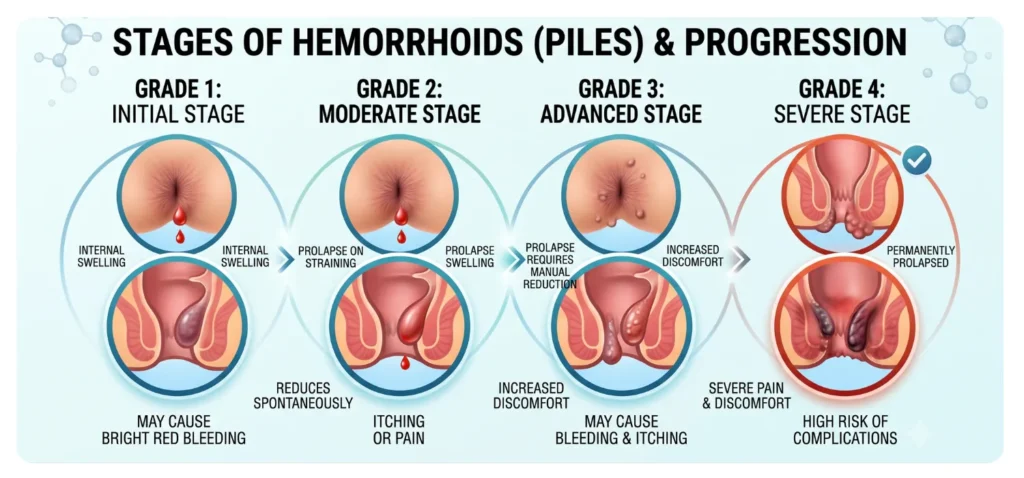
When these tissues become enlarged or irritated, they may bleed during bowel movements. Internal piles are particularly known for causing bright-red bleeding, which may appear on toilet paper, on the surface of the stool, or in the toilet bowl.
Bleeding can be occasional in the early stages. If constipation, straining, or other contributing factors continue, symptoms may become recurrent.
However, blood from the rectum should not automatically be labelled as piles. Anal fissures, bowel conditions, polyps, inflammatory bowel disease, and other problems can also cause rectal bleeding.
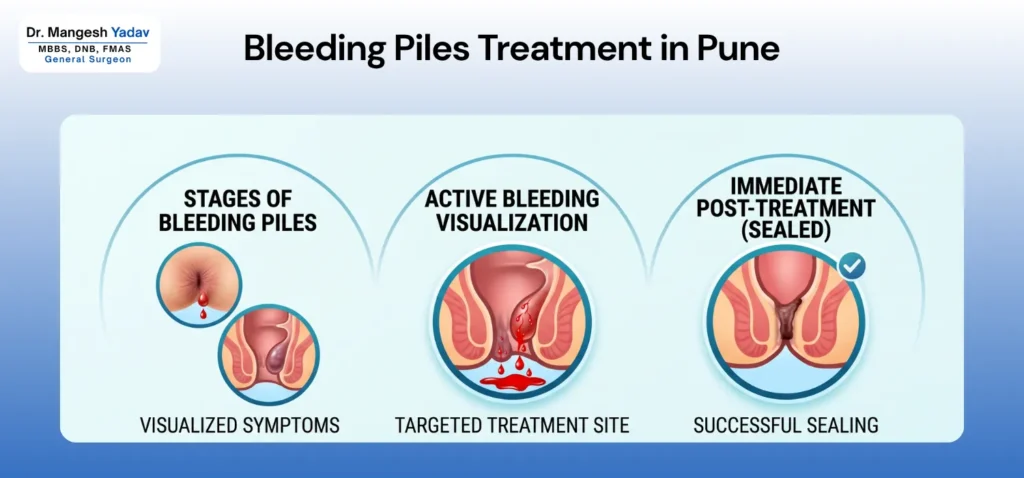
What Does Bleeding From Piles Usually Look Like?
The appearance and pattern of bleeding can provide useful information, but they cannot confirm the diagnosis on their own.
Typical hemorrhoidal bleeding is often:
- Bright red in colour
- Noticed during or shortly after passing stool
- Seen on toilet paper
- Seen as streaks on the outside of stool
- Sometimes noticed as drops in the toilet bowl
These patterns are commonly associated with hemorrhoids, but a doctor may need to evaluate persistent or recurrent bleeding to rule out other causes.
Why Do Piles Bleed?
Bleeding usually occurs when swollen hemorrhoidal tissue becomes irritated or traumatized during bowel movements.
Several everyday habits can increase pressure on the anal and rectal veins.
Constipation
Hard stools can irritate hemorrhoidal tissue and make bowel movements more difficult.
Straining During Bowel Movements
Repeatedly pushing or straining increases pressure in the veins around the rectum.
Prolonged Sitting on the Toilet
Spending excessive time on the toilet can contribute to pressure around the anal region.
Low-Fibre Diet
Insufficient fibre can contribute to harder stools and constipation.
Heavy Lifting
Repeated heavy lifting can increase pressure inside the abdomen and may aggravate hemorrhoidal symptoms.
Pregnancy
Hormonal changes, increased abdominal pressure, and constipation can make piles more likely during pregnancy.
Being Overweight
Excess body weight can increase pressure on the pelvic and rectal region.
These are recognized factors associated with piles.
Bleeding Piles: When Should You See a Doctor?
This is the most important question for anyone experiencing rectal bleeding.
You should arrange a medical evaluation if:
- Bleeding keeps coming back
- Bleeding is becoming heavier
- You have bleeding along with persistent pain
- A lump is coming out during bowel movements
- You have changes in bowel habits
- You have unexplained weight loss
- You feel unusually tired or weak
- Home treatment is not improving your symptoms
- You are unsure whether the bleeding is actually caused by piles
Persistent rectal bleeding deserves proper evaluation because hemorrhoids are not the only possible cause.
When Is Bleeding From the Anus an Emergency?
Not every episode of rectal bleeding is an emergency, but certain warning signs should never be ignored.
Seek urgent medical attention if:
- Bleeding is heavy or continuous
- You see large blood clots
- The toilet water becomes significantly red
- You have severe anal or abdominal pain
- You have black or very dark stools
- Bleeding is accompanied by severe weakness, dizziness, or feeling faint
- You have fever or feel seriously unwell
Heavy or non-stop rectal bleeding requires urgent medical assessment.
Is Every Case of Rectal Bleeding Caused by Piles?
No.
This is one of the most important things patients need to understand.
Piles are a common cause of bright-red rectal bleeding, but bleeding may also occur because of anal fissures, inflammatory bowel disease, polyps, diverticular disease, or colorectal cancer.
The American Society of Colon and Rectal Surgeons specifically emphasizes that rectal bleeding should be properly evaluated in appropriate patients rather than automatically attributed to hemorrhoids.
This is why an experienced doctor should evaluate persistent bleeding before recommending a treatment.
How Does a Piles Doctor Diagnose the Cause of Bleeding?
Your consultation generally begins with a detailed discussion about your symptoms.
The doctor may ask:
- How long have you been experiencing bleeding?
- Is the blood bright red or dark?
- Does bleeding happen during or after bowel movements?
- Are you constipated?
- Do you strain while passing stool?
- Is there pain or itching?
- Do you feel a lump?
- Does anything come out during bowel movements?
- Have your bowel habits changed?
- Have you tried any treatment already?
A physical examination may then be performed.
Depending on your symptoms, the doctor may recommend an anal or rectal examination, proctoscopy, or other investigations. A rectal examination can help identify conditions affecting the anus and rectum, including piles and other abnormalities.
The exact tests required depend on your age, symptoms, medical history, family history, and clinical findings.
What Are the Treatment Options for Bleeding Piles?
Treatment depends on the severity of piles and the patient’s symptoms.
1. Lifestyle and Dietary Management
For mild cases, improving bowel habits can make a significant difference.
This may include:
- Increasing dietary fibre
- Drinking adequate fluids
- Avoiding excessive straining
- Exercising regularly
- Avoiding unnecessary time on the toilet
- Managing constipation
These measures can help keep stools softer and reduce pressure during bowel movements.
2. Medicines
Depending on the symptoms, a doctor may recommend medicines or topical treatments to manage pain, itching, swelling, or constipation.
Medication can help control symptoms, but it may not be enough for advanced or repeatedly prolapsing hemorrhoids.
3. Non-Surgical Procedures
Some patients may benefit from procedures such as:
- Rubber band ligation
- Sclerotherapy
- Infrared coagulation
- Other minimally invasive treatments
These options are generally considered according to the type and severity of hemorrhoids.
When Is Laser Piles Treatment Considered?
Laser treatment may be considered for selected patients whose hemorrhoids require a procedure.
The decision depends on:
- Type of hemorrhoids
- Grade or severity
- Amount of bleeding
- Prolapse
- Previous treatment
- Overall health
- Surgeon’s assessment
Laser treatment should not be promoted as the automatic treatment for every bleeding pile.
A good surgeon first determines why the patient is bleeding and whether the hemorrhoids are actually responsible.
What Is Laser Piles Treatment?
Laser piles treatment is a minimally invasive technique that uses controlled laser energy to treat selected hemorrhoidal tissue.
One technique, known as Laser Hemorrhoidoplasty, uses laser energy within the hemorrhoidal tissue to reduce its blood supply and encourage the swollen tissue to shrink.
Compared with conventional excisional hemorrhoidectomy, minimally invasive techniques may involve less tissue disruption and can provide a more comfortable recovery for appropriately selected patients.
However, the treatment approach should always be based on individual clinical assessment.
Benefits of Laser Piles Treatment
When laser treatment is appropriate, patients may benefit from:
Minimally Invasive Approach
The procedure involves limited tissue disruption compared with traditional excisional surgery.
Reduced Postoperative Discomfort
Selected patients may experience less postoperative discomfort than after conventional hemorrhoidectomy.
Less Bleeding During the Procedure
Laser energy can help coagulate blood vessels during treatment.
Faster Return to Routine
Minimally invasive treatment may allow patients to resume light activities relatively quickly.
Short Hospital Stay
Some laser piles procedures can be performed as day-care or short-stay procedures depending on the patient’s condition and hospital protocol.
The exact benefits and recovery experience vary from patient to patient.
Is Laser Piles Treatment Completely Painless?
This is where patients should be careful about marketing claims.
Laser piles treatment is designed to minimize tissue trauma and postoperative discomfort, but no responsible doctor should promise zero pain for every patient.
Some patients may experience soreness, pressure, or discomfort during recovery.
The amount of discomfort depends on the procedure, severity of piles, individual healing, bowel movements, and pain tolerance.
The goal of modern treatment is not simply to promise “no pain”—it is to provide effective treatment with the least unnecessary discomfort and a safe recovery.
How Much Does Piles Treatment Cost in Pune?
The cost of Piles Treatment in Pune depends on the treatment required.
Factors that can affect the final cost include:
- Severity and grade of piles
- Type of procedure
- Surgeon fees
- Hospital or day-care charges
- Anaesthesia
- Diagnostic tests
- Medicines
- Follow-up care
- Additional procedures, if required
If laser piles treatment is recommended, the cost may be higher than medication or some office-based procedures.
Patients should ask for a complete estimate before treatment and clarify what is included in the package.
What Is Recovery After Piles Treatment?
Recovery depends on the treatment you receive.
After minimally invasive procedures, patients may be able to return to light activities relatively quickly. However, bowel movements may remain uncomfortable for a short period.
Your doctor may recommend:
- Adequate fluids
- Fibre-rich foods
- Constipation prevention
- Regular light walking
- Avoiding unnecessary straining
- Following prescribed medicines
- Avoiding heavy lifting until advised
Keeping stools soft is particularly important because straining can aggravate hemorrhoidal symptoms.
Can Bleeding Piles Come Back?
Yes.
Treatment can address the existing hemorrhoids, but it does not make a person permanently immune to piles.
If constipation, prolonged sitting, straining, low fibre intake, or other contributing factors continue, symptoms can return or new hemorrhoids can develop.
Long-term prevention therefore matters just as much as the treatment itself.
Why Choose Dr. Mangesh Yadav for Bleeding Piles Treatment in Pune?
When you are dealing with rectal bleeding, choosing a surgeon should not be based simply on the availability of laser treatment.
The first priority is accurate diagnosis.
Dr. Mangesh Yadav is a General, Laparoscopic and Robotic Surgeon practicing in Hadapsar, Pune. His official profile highlights 15+ years of surgical experience and 6,000+ piles treatments.
His approach focuses on evaluating the patient’s condition before recommending a particular treatment. This is especially important in bleeding piles because rectal bleeding can have causes other than hemorrhoids.
Depending on the diagnosis and severity, treatment may involve conservative management, medication, minimally invasive procedures, or surgery.
For patients looking for an experienced Piles Doctor in Pune, Piles Specialist in Hadapsar, or General Surgeon in Hadapsar, Dr. Mangesh Yadav offers specialized care for piles and other anorectal conditions.
The goal is not simply to stop the bleeding temporarily, but to understand its cause and provide the most appropriate treatment.
Conclusion
Bleeding piles are common, but rectal bleeding should never be ignored or automatically blamed on hemorrhoids.
Bright-red blood during or after bowel movements can occur with piles, particularly when accompanied by symptoms such as itching, swelling, or a prolapsing lump. But persistent or unexplained bleeding needs proper evaluation to identify the actual cause.
Once the diagnosis is confirmed, treatment can range from dietary and lifestyle changes to medicines, office-based procedures, laser treatment, or conventional surgery depending on the condition.
If you are searching for the best Piles Doctor in Pune, an experienced surgeon can help you understand the cause of your bleeding and choose a treatment that is appropriate for your condition.
Frequently Asked Questions
Is bleeding during bowel movements always a sign of piles?
No. Piles are a common cause of bright-red rectal bleeding, but anal fissures, inflammatory bowel disease, polyps, and other conditions can also cause bleeding. Persistent or unexplained bleeding should be evaluated by a doctor.
What does bleeding from piles usually look like?
Bleeding from hemorrhoids is commonly bright red and may appear on toilet paper, on the outside of stool, or in the toilet bowl after a bowel movement. However, the appearance of blood alone cannot confirm that piles are the cause.
When should I see a Piles Doctor for bleeding?
You should see a doctor if bleeding keeps recurring, becomes heavier, occurs with pain or other symptoms, or does not improve with appropriate home care.
When is rectal bleeding an emergency?
Heavy or continuous bleeding, large blood clots, severe pain, or black or very dark stools require urgent medical assessment.
Can bleeding piles be treated without surgery?
Yes. Depending on the severity, treatment may include fibre, fluids, constipation management, medicines, and office-based procedures such as rubber band ligation.
Is laser treatment suitable for bleeding piles?
Laser treatment may be an option for selected patients, but it is not suitable for every type or grade of hemorrhoid. A surgeon should first determine the cause and severity of the bleeding.
Can piles cause frequent bleeding?
Yes, hemorrhoids can cause recurrent bleeding, particularly during bowel movements. However, repeated bleeding should be evaluated rather than assumed to be piles.
How is bleeding piles diagnosed?
A doctor may review your symptoms and medical history and perform an examination of the anal and rectal area. Additional tests may be recommended depending on your symptoms and risk factors.
Need Help? We’ve Got You Covered
Contact Details
Clinic Address
Vishwaraj Hospital, Pune Solapur Road, Loni Kalbhor, Pune 412201
Monday To Saturday: 03.00 PM to 05.00 PM / 07.00 PM to 08.30 PM
Sunday: 10.30 AM to 01.00 PM