
Best Treatment for Anal Fistula | A Complete Patient Guide
- Home
- Hernia Care
- Best Treatment for Anal Fistula | A Complete Patient Guide
Best Treatment for Anal Fistula | A Complete Patient Guide

Written & Medically Reviewed By:
Dr. Mangesh Yadav
General, Laparoscopic & Robotic Surgeon
15+ Years of Surgical Experience
6,000+ Piles Cases Treated
Table of Contents
Anal fistula is a condition that can affect much more than physical comfort. Persistent discharge, swelling near the anus, recurring infections and pain while sitting or passing stools can make everyday life difficult. Some people experience symptoms for months, assuming that the problem is piles or a recurring skin infection. While other patients feel embarrassed to discuss it and keep postponing medical attention.
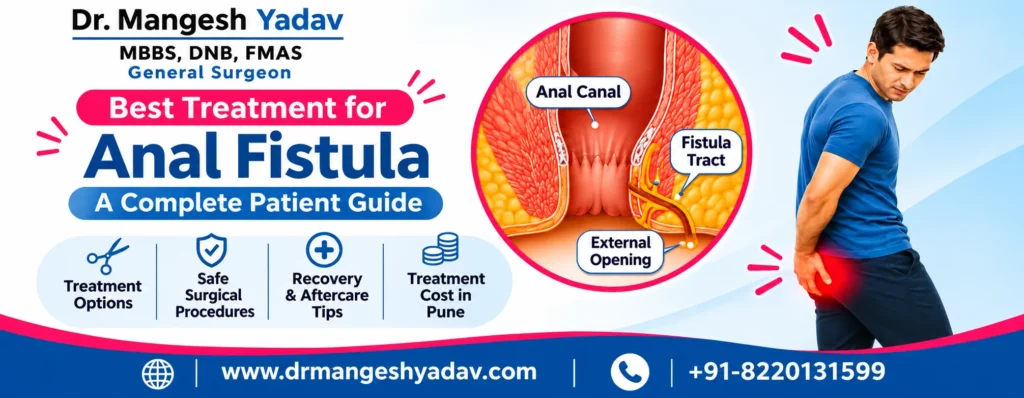
But an anal fistula is not an ordinary skin wound. It is an abnormal tunnel that develops between the inside of the anal canal and the skin around the anus. In most cases, it develops after an infection or abscess near the anal glands.
The good news is that many effective treatments are available. The important thing is to identify the exact type of fistula and choose a procedure that treats the infection while protecting the muscles responsible for bowel control.
If you are searching for the Best Treatment for Anal Fistula, this article explains the causes, symptoms, diagnosis, treatment options, recovery and expected treatment costs in Pune.
Overview
An anal fistula is an abnormal tunnel that develops between the anal canal and the surrounding skin, often following an infection or anal abscess. It can cause persistent pus discharge, swelling, pain, irritation and recurring infections, affecting everyday comfort and quality of life. Understanding the condition and choosing the right treatment is essential for effective healing. This blog explores the common causes, symptoms and types of anal fistula, along with diagnostic methods and treatment options such as fistulotomy, seton placement, LIFT and laser surgery (FiLaC). It also covers recovery after surgery, possible recurrence, treatment costs in Pune and when to consult an experienced surgeon like Dr. Mangesh Yadav for proper evaluation and personalised treatment guidance.
What Are the Common Symptoms of an Anal Fistula?
The symptoms may vary depending on the location and complexity of the fistula. Some people experience continuous discharge while others have repeated episodes of swelling and pain.
Persistent Pus or Fluid Discharge
One of the most noticeable signs is pus-like or blood-stained fluid coming from a small opening near the anus. The discharge may have an unpleasant smell and can stain underwear.
Repeated Swelling Near the Anus
You may notice a small lump or swelling near the anal opening. It may become painful when infection or pus accumulates.
Pain and Discomfort
Anal fistula can cause pain while sitting, walking or passing stools. The discomfort may become more intense when an abscess develops.
Recurrent Anal Abscess
If the fistula does not drain properly, pus can collect and form another abscess. The swelling may become painful and tender before eventually draining.
Skin Irritation/ Itching
Continuous discharge can irritate the surrounding skin, causing itching, redness and discomfort.
Fever
Fever, increasing pain and swelling may indicate an active infection or abscess. These symptoms should not be ignored.
When should you see a doctor? If you notice recurring pus discharge, a painful lump near the anus or repeated swelling in the same area, arrange a medical examination. Seek urgent medical care if you develop fever, rapidly increasing swelling, severe pain or feel generally unwell.
Anal Fistula Causes
Understanding the anal fistula causes can help explain why the condition develops and why it sometimes returns after treatment.
Previous Anal Abscess
This is the most common cause. An infection in one of the anal glands can lead to an abscess. If an abnormal tunnel remains after the abscess drains, it may develop into a fistula.
Blocked or Infected Anal Glands
Small glands inside the anal canal can become blocked and infected. The infection may spread into the surrounding tissue and create a channel towards the skin.
Crohn’s Disease
Crohn’s disease is a chronic inflammatory bowel condition. In some people, inflammation can affect the anal and rectal region and lead to complex or recurring fistulas.
Previous Surgery or Injury
Certain procedures, injuries or trauma involving the anal region may contribute to fistula formation.
Tuberculosis and Other Infections
In some cases, infections such as tuberculosis can be associated with fistula formation. The underlying cause may need specific investigation and treatment.
It is worth remembering that an anal fistula is not necessarily caused by poor hygiene, constipation or eating spicy food. These are common misconceptions. The underlying problem is usually infection or inflammation involving the anal glands or surrounding tissues.
Types of Anal Fistula
Not every anal fistula follows the same path. Some remain close to the skin, while others pass through important muscles around the anal canal. The surgeon identifies the fistula type before deciding on treatment.
Type | Description |
Intersphincteric | Passes between the internal and external anal sphincter muscles. |
Transsphincteric | Passes through both sphincter muscles. |
Suprasphincteric | Travels above the external sphincter before reaching the skin. |
Extrasphincteric | Passes outside the sphincter muscle complex and is less common. |
How Is an Anal Fistula Diagnosed?
A proper diagnosis is the first step towards successful treatment. The surgeon needs to identify the external opening, internal opening, fistula pathway and any associated abscesses.
Clinical Examination
The doctor will ask about your symptoms, previous abscesses, discharge, pain and any earlier fistula procedures. An examination of the area around the anus may help identify the external opening, swelling and signs of infection.
Digital Rectal Examination
When appropriate, the surgeon may perform a gentle examination to assess the anal canal and surrounding tissues.
MRI Fistula Mapping
An MRI may be recommended, particularly for complex, recurrent or multiple fistulas. MRI helps identify the course and length of the fistula tract, its relationship with sphincter muscles, secondary branches or extensions, and associated abscesses.
Examination Under Anaesthesia
In selected cases, the surgeon may examine the fistula under anaesthesia. This allows a more detailed assessment of the tract and internal opening and may help guide treatment.
MRI is not required for every simple fistula. However, it can be particularly useful when the anatomy is difficult to assess clinically or when previous treatment has failed. The diagnostic approach should be based on the complexity of the condition rather than ordering every available test.
Best Treatment for Anal Fistula
The right way to treat Anal Fistula depends on whether the fistula is simple or complex, how much sphincter muscle is involved, whether infection is present and whether the patient has undergone previous surgery.
The two main goals are to treat the fistula and prevent further infection or recurrence, while preserving the anal sphincter muscles and protecting bowel control.
Fistulotomy
Fistulotomy is a commonly performed procedure for simple, low anal fistulas. During the procedure, the surgeon opens the fistula tract along its length, allowing it to heal gradually from the inside out. The patient is given appropriate anaesthesia, the surgeon identifies the tract, opens it and leaves the wound to heal gradually. Fistulotomy can be highly effective for appropriately selected simple fistulas. However, it is generally unsuitable when opening the tract would require cutting a significant amount of sphincter muscle.
Seton Placement
For a fistula that passes through a significant portion of the sphincter muscles, the surgeon may recommend a seton. A seton is a thin surgical thread or soft material passed through the fistula tract and tied into a loop. A loose draining seton keeps the fistula open for drainage, helps prevent pus from collecting and allows inflammation to settle. It may be used before another definitive procedure. A loose seton does not usually close the fistula by itself; it is often part of a staged treatment plan.
LIFT Procedure
LIFT stands for Ligation of the Intersphincteric Fistula Tract. It is a sphincter-preserving surgical option used for selected fistulas that pass between the anal sphincter muscles. The surgeon accesses the space between the sphincter muscles, identifies the fistula tract, ties it off and divides it. It aims to avoid deliberate division of the main sphincter muscles. LIFT is not suitable for every fistula; anatomy, infection status and previous surgical history influence whether it is appropriate.
Advancement Flap Procedure
An advancement flap may be considered for certain complex fistulas where a conventional fistulotomy could carry a high risk of affecting bowel control. The surgeon removes or cleans the fistula tract and covers the internal opening with a flap of healthy tissue taken from the rectal wall. The aim is to close the internal opening while avoiding significant damage to the sphincter muscles. Success depends on fistula anatomy, tissue health, inflammation and previous treatment.
Laser Treatment for Anal Fistula (FiLaC)
FiLaC stands for Fistula-tract Laser Closure. A specialised laser fibre is introduced into the fistula tract. Laser energy treats the tract from within, with the aim of encouraging it to close. It may offer a sphincter-preserving approach and smaller external wounds in selected cases. However, laser treatment is not automatically the best option for every patient. Healing and recurrence outcomes vary, and long-term evidence is less established than for some conventional procedures. Ask the surgeon about expected outcomes for your anatomy, the possibility of repeat treatment and alternatives.
Can Fistula Be Treated Without Surgery?
This is one of the most common questions patients ask: “Can I get rid of an anal fistula with medicines, antibiotics or home remedies without undergoing surgery?”
The honest answer is that an established anal fistula usually does not heal permanently with medicines alone.
Antibiotics may be required in selected situations, particularly when there is spreading infection, systemic illness or specific underlying medical conditions. They can help control infection but do not usually close the abnormal tunnel. Painkillers, ointments, sitz baths and hygiene measures may reduce discomfort but cannot reliably eliminate the fistula tract.
Laser Treatment vs Traditional Fistula Surgery: Which Is Better?
Patients often assume that laser treatment must be better because it involves less cutting. However, the best procedure is not necessarily the one with the smallest incision. The treatment must address the fistula completely while protecting the sphincter muscles.
Factor | Traditional Fistula Surgery | Laser / Minimally Invasive Procedures |
Common examples | Fistulotomy, seton, LIFT, advancement flap | FiLaC, selected VAAFT procedures |
Main approach | Opens, drains, divides or closes the tract depending on procedure | Treats or closes the tract using specialised instruments or energy |
Suitability | Depends on fistula type and sphincter involvement | Depends on fistula anatomy and available expertise |
Wound | May involve an open wound that heals gradually | May involve smaller external wounds |
Recurrence | Depends on anatomy, technique and healing | Also possible; long-term results vary by technique |
Bowel-control risk | Depends on the amount of sphincter muscle affected | Depends on the procedure and anatomy; sphincter preservation is a key goal |
Fistula Treatment Cost in Pune
The fistula treatment cost in Pune can vary depending on the complexity of the fistula and the procedure required. There is no single fixed price that applies to every patient.
- Type of fistula: Simple fistulas and complex or recurrent fistulas may require different levels of treatment.
- Procedure selected: Fistulotomy, seton placement, LIFT, laser treatment and VAAFT have different costs.
- MRI and diagnostic tests: MRI fistula mapping and other investigations may add to the total expense.
- Hospital facilities: Room category, operation theatre charges, anaesthesia and hospital stay can influence the bill.
- Previous surgery: Recurrent fistulas may require more detailed evaluation and a more involved treatment plan.
- Postoperative care: Follow-up visits, dressings and prescribed medicines may form part of the total cost.
Recovery After Anal Fistula Surgery
Recovery depends on the procedure performed, the size and complexity of the fistula, and the body’s healing response. Some patients can return to light daily activities relatively soon, while others need a longer recovery period.
First Few Days
Mild to moderate discomfort, swelling or drainage may occur after surgery. Your surgeon may prescribe pain medication and provide instructions for wound care. If the procedure involves an open wound, some discharge during the healing process may be expected.
Bowel Movements
Passing stools can feel uncomfortable initially. Keeping stools soft is important to avoid unnecessary straining. Your doctor may recommend adequate water intake, fibre-rich foods, stool softeners when appropriate and avoiding prolonged sitting on the toilet.
Wound Care
Depending on the procedure, you may need regular cleaning, dressings or sitz baths. Follow the instructions given by your surgeon. Do not apply creams, antiseptics or home remedies to the wound without medical advice.
Follow-Up Visits
Follow-up appointments help the surgeon check wound healing, identify infection and assess whether the fistula is closing. Do not skip follow-up visits simply because pain or discharge has reduced.
Can an Anal Fistula Come Back After Surgery?
Yes. Anal fistula can recur even after treatment. Recurrence may happen if the internal opening was not identified or adequately treated, the fistula has secondary branches, an abscess or infected collection remains, the fistula is complex or recurrent, an underlying condition such as Crohn’s disease is not controlled, or healing is affected by other medical factors.
This is why accurate diagnosis and treatment planning matter as much as the procedure itself. If discharge, swelling or pain returns after surgery, do not assume that it is normal healing. Arrange a follow-up examination.
Why Choose Dr. Mangesh Yadav for Anal Fistula Treatment in Pune?
Choosing the right surgeon is an important part of anal fistula treatment, particularly when the fistula is complex or has returned after previous surgery.
Dr. Mangesh Yadav is a General, Laparoscopic and Robotic Surgeon providing surgical care for anorectal conditions, including piles, fissures and fistulas. According to his official website, he has more than 15 years of surgical experience and has performed over 4,000 fistula treatments.
His approach focuses on understanding the condition, selecting an appropriate surgical technique and planning treatment with patient safety and comfort in mind.
Patients seeking Anal fistula treatment in Pune can discuss their symptoms, diagnostic findings and available treatment options with him.
When Should You Consult a Fistula Surgeon?
Do not postpone an examination if you experience:
- Repeated pus discharge near the anus.
- A lump that repeatedly becomes swollen and painful.
- A wound near the anal opening that does not heal.
- Recurrent anal abscesses.
- Persistent discomfort while sitting or passing stools.
- Fever or increasing pain around the anal region.
If you have severe pain, rapidly increasing swelling, fever or feel significantly unwell, seek urgent medical attention. An abscess may require prompt drainage. Early assessment can help prevent repeated episodes of infection and allow the surgeon to plan the most suitable treatment.
Conclusion
Anal fistula is a treatable condition, but it should not be ignored or managed only with temporary remedies. The right treatment depends on the fistula’s pathway, its relationship with the sphincter muscles and whether there is an active infection.
While fistulotomy is effective for many simple fistulas, complex cases may require seton placement, LIFT, advancement flap or selected minimally invasive procedures.
If you are experiencing recurring discharge, swelling or pain near the anus, consult an experienced surgeon for a proper diagnosis. Choosing treatment based on the actual fistula anatomy—not simply on the name of the procedure—is the most important step towards safe and effective recovery.
Frequently Asked Questions
What is the best treatment for anal fistula?
The best treatment depends on the type and location of the fistula. Fistulotomy is commonly used for simple, low fistulas, while complex fistulas may require seton placement, LIFT, advancement flap or selected laser and video-assisted procedures. The surgeon must assess sphincter involvement before recommending treatment.
Can an anal fistula heal without surgery?
Most established anal fistulas do not heal permanently without a procedure. Medicines and antibiotics may control infection, while sitz baths and hygiene measures can reduce discomfort. However, these measures generally do not close the abnormal tunnel.
Is laser treatment effective for anal fistula?
Laser fistula treatment, also known as FiLaC, uses laser energy to treat the fistula tract while aiming to preserve the sphincter muscles. It may be suitable for selected patients, but healing and recurrence outcomes vary. It is not automatically better than conventional surgery for every fistula.
Is anal fistula a serious condition?
An anal fistula is not usually life-threatening, but it can cause repeated infection, abscess formation, discharge and discomfort. An untreated fistula may continue to cause problems, so medical evaluation is important.
What are the main causes of anal fistula?
The most common cause is an infection in an anal gland that develops into an abscess. Other possible causes include Crohn’s disease, certain infections such as tuberculosis, and previous surgery or injury involving the anal region.
How do I know if my fistula is simple or complex?
A surgeon assesses the fistula’s location, pathway, branches and relationship with the anal sphincter muscles. MRI fistula mapping may be recommended for complex or recurrent cases. Symptoms alone cannot reliably determine the type.
Is anal fistula surgery painful?
The procedure is generally performed under anaesthesia, so you should not feel the surgery itself. Some discomfort, soreness or wound-related pain can occur afterwards. The level of discomfort and recovery depend on the procedure and the fistula’s complexity.
How long does it take to recover after fistula surgery?
Recovery varies with the procedure and the size and complexity of the fistula. Some patients resume light activities within a few days, while wound healing may take several weeks or longer. Your surgeon can provide a more realistic recovery estimate after assessing your condition.