
Can Gym or Weight Lifting Cause Piles?
- Home
- Hernia Care
- Can Gym or Weight Lifting Cause Piles?
Can Gym or Weight Lifting Cause Piles?

Written & Medically Reviewed By:
Dr. Mangesh Yadav
General, Laparoscopic & Robotic Surgeon
15+ Years of Surgical Experience
6,000+ Piles Cases Treated
Table of Contents
Going to the gym regularly can improve strength, fitness, and overall health. However, people who lift heavy weights may sometimes experience discomfort, pressure, or swelling around the anal area. This raises a common question: Can gym or weight lifting cause piles?
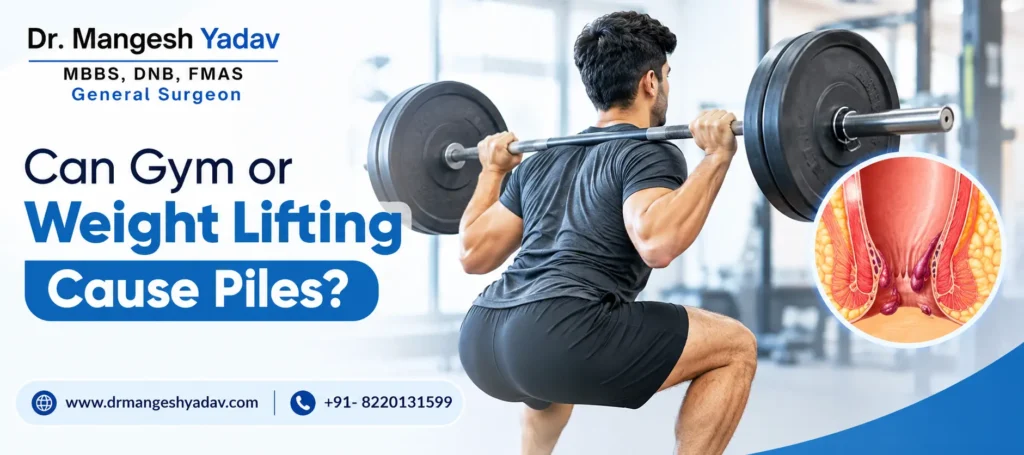
Weight lifting does not automatically cause piles. However, heavy lifting, holding your breath while exercising, and repeatedly straining during workouts may increase pressure around the rectum and potentially worsen existing haemorrhoids.
Overview
Heavy weight lifting may worsen piles by increasing abdominal pressure, especially when straining or holding your breath. Proper lifting techniques, adequate hydration, and a fibre-rich diet can help reduce the risk. If symptoms persist, consult a doctor.
How Heavy Weight Lifting Affects Piles
1. Increased abdominal pressure
Lifting heavy weights can increase pressure within the abdomen. This may also increase pressure around the veins in the rectal area, potentially aggravating haemorrhoidal symptoms.
2. Holding your breath during exercise
Some lifters hold their breath while exerting force, a technique known as the Valsalva manoeuvre. Although it can be used in certain strength-training situations, it produces a temporary rise in pressure. People experiencing piles symptoms should discuss appropriate breathing and lifting techniques with a qualified trainer or healthcare professional.
3. Straining during workouts
Repeatedly pushing beyond your capacity, particularly when your technique breaks down, can increase unnecessary physical strain. Reducing excessive effort may help limit discomfort.
4. Constipation and inadequate hydration
A high-protein diet without enough fibre, insufficient fluid intake and irregular bowel habits may contribute to constipation. Straining during bowel movements is a recognised risk factor for piles.
5. Existing haemorrhoids
If you already have piles, heavy lifting may make discomfort, swelling or bleeding more noticeable. Symptoms that repeatedly worsen during exercise deserve medical assessment.
Symptoms of Piles
Identifying the initial symptoms of piles can help to get appropriate advice before discomfort becomes more troublesome.
Common symptoms of Piles are:
- Bright-red blood on toilet paper or the surface of the stool.
- Itching or irritation around the anus.
- Swelling or a lump near the anal opening.
- Discomfort while sitting or passing stool.
- A feeling that the bowel has not emptied.
- Mucus or moisture around the anal area in some cases.
Internal piles may cause bleeding without significant pain. External piles can be more uncomfortable, particularly if a clot develops.
Important: Rectal bleeding should not automatically be attributed to piles. Anal fissures, intestinal conditions, and other problems can cause similar symptoms. Consult a qualified doctor if you notice bleeding, persistent pain, or a new lump.
Can You Continue Gym Workouts If You Have Piles?
It depends on the severity of your symptoms.
If you have mild symptoms, gentle physical activity may be possible. Walking and other comfortable, low-impact exercises can support general health and bowel regularity.
If you experience active bleeding, significant pain, a painful lump or worsening swelling, stop strenuous lifting and seek medical advice. Avoid trying to push through pain or bleeding.
Once symptoms improve, return to strength training gradually. A healthcare professional can help determine whether any temporary restrictions are appropriate.
How to Prevent Piles While Weight Lifting
You may be able to reduce the likelihood of aggravating piles by making practical changes to your workout routine and daily habits.
1. Use an Appropriate Weight
Choose a resistance level that allows you to maintain proper technique. Avoid repeatedly attempting maximum lifts if you are experiencing symptoms.
Gradually increasing the load is generally more sensible than making sudden, substantial jumps in weight.
2. Practice Controlled Breathing
Avoid prolonged breath-holding and excessive straining, especially when symptoms are active. Exhale during the effort phase of an exercise when appropriate for the movement.
Breathing requirements can differ for heavy strength training, so seek guidance from a qualified trainer and your healthcare professional if you have an existing medical concern.
3. Stay Hydrated
Adequate fluid intake helps support normal bowel function. Your individual needs depend on activity level, climate and health conditions.
People who exercise in hot weather or sweat heavily may need additional fluids. Follow medical advice if you have been told to restrict fluid intake.
4. Include Fibre-Rich Foods
Fibre helps soften stools and can reduce straining during bowel movements when consumed with adequate fluids.
Include foods such as fruits, vegetables, oats, whole grains, beans and lentils in your daily meals.
5. Avoid Straining During Bowel Movements
Respond to the urge to pass stool instead of delaying it. Avoid prolonged sitting on the toilet and excessive pushing.
If constipation continues despite dietary changes, consult a healthcare professional rather than relying on repeated self-medication.
6. Adjust Your Workout During Symptoms
If an exercise increases pain, pressure, or bleeding, stop that activity and seek advice. Temporarily switching to comfortable walking or other gentle activities may be appropriate, depending on your symptoms.
7. Maintain a Balanced Training Routine
Exercise is beneficial for general health, and regular movement can support bowel regularity. Balance strength training with recovery, suitable nutrition, and adequate sleep.
Conclusion
So, can gym or weight lifting cause piles? Heavy lifting may increase abdominal pressure and aggravate haemorrhoids in some people, but it is not the only factor involved. Constipation, straining, bowel habits and individual susceptibility also play important roles.
You do not necessarily need to stop exercising permanently. Use appropriate weights, practise controlled breathing, maintain a fibre-rich diet and avoid movements that worsen your symptoms. If bleeding, pain or swelling persists, seek medical advice rather than relying solely on home remedies.
Laser Surgery for Piles may be an option for selected patients, but the appropriate treatment depends on a proper clinical assessment. If you are considering Laser Piles Treatment in Hadapsar Pune, consult a qualified doctor to understand the available options, expected recovery and potential risks.
For more information about related conditions and treatment options, visit the Dr. Mangesh Yadav
Frequently Asked Questions
Can gym or weight lifting cause piles?
Heavy weight lifting may aggravate existing piles or contribute to symptoms in susceptible individuals by increasing abdominal pressure. However, weight lifting alone is not established as a direct cause in every case. Constipation, straining, and other factors also matter.
Is it safe to go to the gym if I have piles?
It depends on your symptoms. Gentle activity may be comfortable for some people, but heavy lifting should be avoided if it triggers pain, bleeding or increased swelling. Consult a doctor for persistent or significant symptoms.
Which exercises should I avoid if I have piles?
Consider temporarily avoiding heavy squats, deadlifts, leg presses and other movements that cause excessive straining or worsen symptoms. The right modifications depend on your condition and should be individualised.
What are the initial symptoms of piles?
Initial symptoms may include bright-red bleeding during bowel movements, anal itching, irritation, swelling or a lump near the anus. Some internal piles cause bleeding without pain. Rectal bleeding should be assessed rather than automatically assumed to be piles.
Does weight lifting make existing piles worse?
It can worsen symptoms in some individuals, especially when lifting involves intense straining or breath-holding. Reducing the load, improving technique and avoiding exercises that trigger symptoms may help.
What is the best diet for piles patients?
A fiber-rich diet containing fruits, vegetables, whole grains, beans, and lentils can help support softer stools and reduce straining. Adequate fluid intake is also important. Individual dietary needs may vary.
Is Laser Surgery for Piles suitable for everyone?
No. Laser Surgery may be appropriate for selected patients, but suitability depends on the type and severity of haemorrhoids and the doctor’s assessment. Other treatments may be more appropriate in some cases.
When can I return to weight lifting after piles treatment?
The timing depends on the treatment performed, the severity of your condition, and your recovery. Follow your treating doctor’s instructions before resuming heavy exercise, and increase training intensity gradually when cleared.