
Laser Piles Treatment in Pune | Cost, Benefits & Procedure

Written & Medically Reviewed By:
Dr. Mangesh Yadav
General, Laparoscopic & Robotic Surgeon
15+ Years of Surgical Experience
6,000+ Piles Cases Treated
Table of Contents
Piles can be uncomfortable, embarrassing, and frustrating—especially when symptoms keep coming back.
You may notice blood on the toilet paper, pain while passing stools, itching around the anus, or a lump that appears during bowel movements. At first, you may try home remedies or medicines and hope the problem disappears. Sometimes it does improve temporarily. But when piles keep returning or start interfering with your daily routine, it is time to get them properly evaluated.
One of the modern treatment options available today is laser piles treatment. It is a minimally invasive approach that can help suitable patients manage symptomatic hemorrhoids with less tissue damage and, in many cases, a more comfortable recovery than conventional hemorrhoidectomy.
If you are searching for Laser Piles Treatment in Pune, this article explains everything you should know—including the procedure, benefits, recovery, expected cost, and how to decide whether laser treatment is right for you.
AI;DR
Laser piles treatment in Pune is a minimally invasive option for suitable patients with symptomatic hemorrhoids. It can help reduce discomfort, bleeding, and recovery time compared with conventional piles surgery. The estimated cost is around ₹45,000–₹80,000, depending on the severity of piles, procedure, hospital, and other treatment requirements. An experienced surgeon such as Dr. Mangesh Yadav can assess your condition and recommend whether laser treatment or another approach is best for you.
What Are Piles?
Piles, medically called hemorrhoids, are swollen and enlarged blood vessels in and around the lower rectum and anus.
They are commonly associated with increased pressure in this area, particularly from constipation, repeated straining during bowel movements, prolonged sitting, pregnancy, excess body weight, and ageing.
Piles can be:
Internal Piles
These develop inside the rectum. They may not be painful initially but can cause bleeding or prolapse during bowel movements.
External Piles
These develop under the skin around the anus and can cause swelling, discomfort, itching, and sometimes severe pain, particularly if a blood clot forms.
Not every person with piles needs surgery. Mild cases may improve with dietary changes, medicines, and better bowel habits. However, persistent, recurrent, prolapsing, or advanced piles may require a procedure.
What Are the Symptoms of Piles?
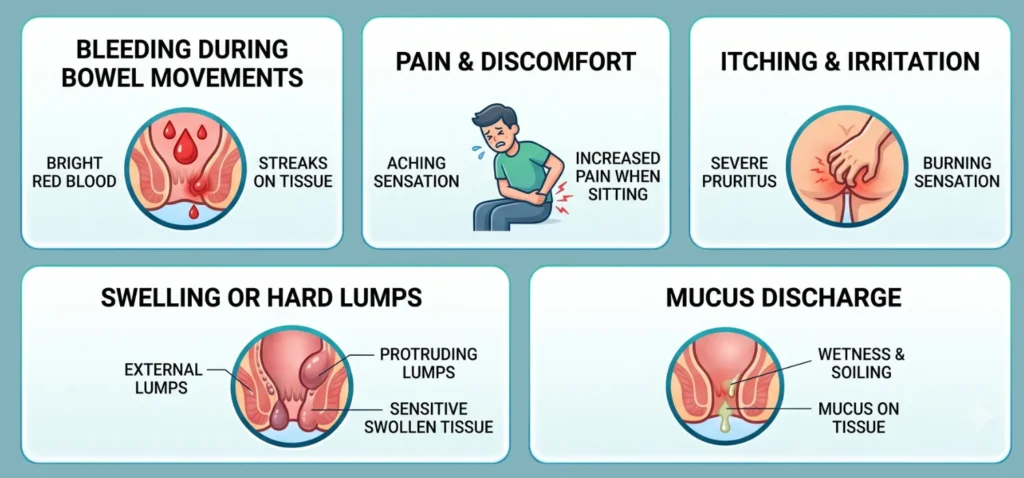
Many people first notice piles because of bleeding while passing stools. However, symptoms can vary depending on the type and severity.
Common symptoms include:
- Bright-red bleeding during or after bowel movements
- Pain or discomfort around the anus
- Itching or irritation
- Swelling
- A lump around the anal opening
- A feeling that something is coming out during bowel movements
- Difficulty or discomfort while sitting
- Mucus discharge
- A feeling of incomplete bowel evacuation
If bleeding continues or keeps coming back, don’t simply assume it is piles. Rectal bleeding can have several causes and should be evaluated by a qualified doctor.
When Do You Need Laser Piles Treatment?
This is one of the most important questions patients ask.
Having piles does not automatically mean you need laser surgery.
Treatment depends on the severity of your symptoms, the type and grade of hemorrhoids, previous treatments, and your overall health.
Laser treatment may be considered when:
- Piles are repeatedly causing symptoms
- Bleeding keeps recurring
- Piles are prolapsing
- Conservative treatment has not provided sufficient relief
- The surgeon believes a minimally invasive procedure is appropriate
- The patient wants an alternative to conventional excisional surgery
An experienced surgeon should examine you first and explain whether laser treatment is actually appropriate.
What Is Laser Piles Treatment?
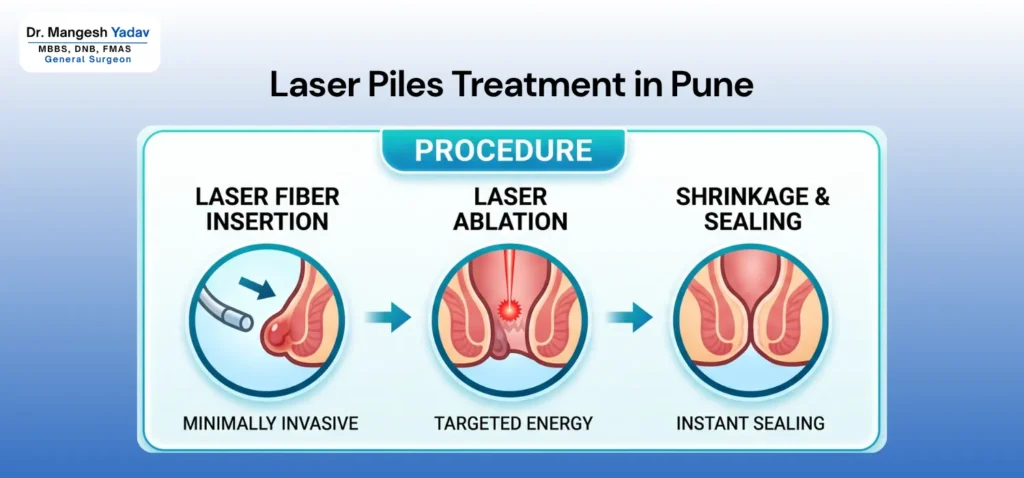
Laser piles treatment is a minimally invasive procedure in which controlled laser energy is used to treat the affected hemorrhoidal tissue.
One commonly used technique is Laser Hemorrhoidoplasty (LHP). In this approach, laser energy is delivered into the hemorrhoidal tissue. The energy helps reduce the blood supply to the swollen tissue, allowing it to shrink over time.
Because the technique involves limited tissue cutting compared with conventional hemorrhoidectomy, postoperative discomfort can be lower in appropriately selected patients.
However, laser treatment is not a one-size-fits-all procedure. Depending on the condition, your surgeon may recommend medication, rubber band ligation, another minimally invasive procedure, or conventional surgery instead.
The objective should always be the right treatment—not simply choosing laser because it is newer.
How Is Laser Piles Surgery Done?
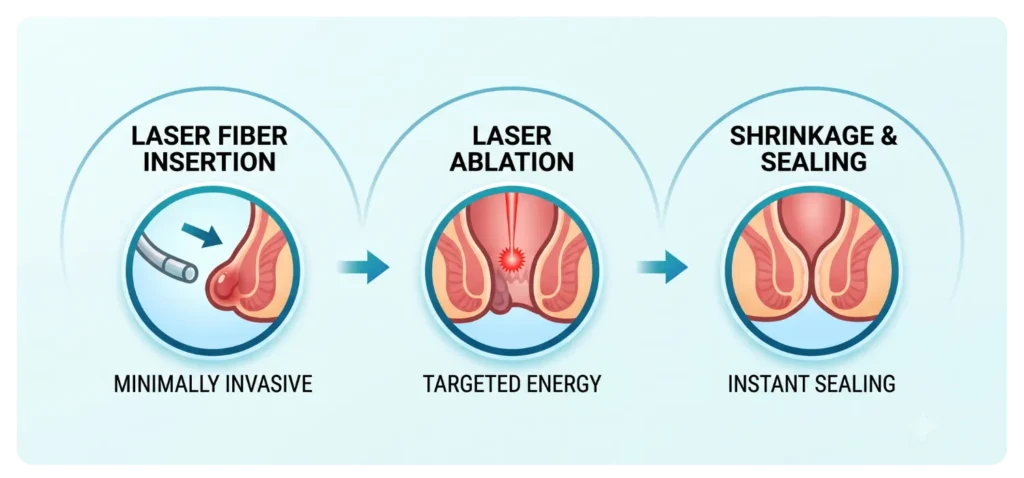
If laser treatment is recommended, the process generally involves several stages.
Step 1: Consultation and Diagnosis
Your surgeon first discusses your symptoms, bowel habits, previous treatments, medical history, and lifestyle.
A physical examination helps determine the type and severity of hemorrhoids.
Additional tests may be recommended when necessary, particularly when the symptoms require further investigation.
Step 2: Treatment Planning
After evaluating your condition, the surgeon explains the available treatment options.
If laser piles treatment is suitable, you will be informed about the procedure, expected recovery, possible risks, and approximate cost.
This consultation is important because two patients with “piles” may require completely different treatments.
Step 3: Anaesthesia
The type of anaesthesia depends on the procedure and the patient’s individual requirements.
The purpose is to keep you comfortable throughout the treatment.
Step 4: Laser Treatment
A specialized laser fibre is carefully positioned to target the hemorrhoidal tissue.
Controlled laser energy is then delivered to the affected area. The treatment is designed to shrink the hemorrhoidal tissue while limiting damage to the surrounding area.
Step 5: Recovery and Discharge
After the procedure, you are monitored for a period of time.
Depending on the procedure, anaesthesia, and your overall health, laser piles treatment may be performed as a day-care procedure or may require a short hospital stay.
Your surgeon will provide specific instructions regarding diet, medicines, activity, and follow-up.
What Are the Benefits of Laser Piles Treatment?
The growing interest in laser treatment is largely because patients want effective treatment without the prolonged discomfort traditionally associated with piles surgery.
1. Minimally Invasive Treatment
Laser treatment generally involves less tissue cutting than conventional hemorrhoidectomy.
2. Less Postoperative Discomfort
For appropriately selected patients, minimally invasive laser procedures may result in less postoperative pain than traditional excisional surgery.
3. Less Bleeding
The controlled laser energy can help coagulate blood vessels during the procedure.
4. Faster Recovery
Many patients can return to light daily activities relatively quickly, although recovery varies from person to person.
5. No Large Surgical Wound
Compared with conventional hemorrhoidectomy, laser techniques generally involve less extensive tissue removal.
6. Shorter Hospital Stay
Many minimally invasive piles procedures can be performed as day-care procedures or with a short hospital stay.
Laser Piles Treatment Cost in Pune
The cost of laser piles treatment in Pune can vary considerably from one patient to another.
There is no single price that applies to everyone because the final cost depends on several factors.
Factors That Affect the Cost of Laser Piles Treatment
- Grade and severity of piles
- Type of procedure performed
- Number of hemorrhoids being treated
- Surgeon’s fees
- Hospital or day-care charges
- Anaesthesia charges
- Pre-operative investigations
- Medicines
- Follow-up care
- Whether an additional procedure is required
As an indicative range, laser piles treatment in Pune may cost approximately ₹45,000 to ₹80,000, depending on the patient’s condition and treatment setup.
This is only an estimated range. The actual cost should be discussed with your surgeon after examination.
Laser Piles Surgery vs Traditional Piles Surgery
Patients often ask, “Is laser better than traditional surgery?”
The answer depends on the individual case.
| Factor | Laser Piles Treatment | Conventional Hemorrhoidectomy |
|---|---|---|
| Approach | Minimally invasive | Excisional surgery |
| Tissue removal | Limited | More extensive |
| Postoperative discomfort | Generally lower in suitable cases | Usually higher |
| Recovery | Often faster | Usually longer |
| Bleeding | Generally limited | Can be more significant |
| Hospital stay | Often day-care/short stay | May require longer observation |
| Suitable for | Selected patients | Often used for advanced or large hemorrhoids |
The important takeaway is that laser is not necessarily the right choice for every grade or type of piles.
A qualified surgeon should recommend treatment after examining the patient.
How Long Does It Take to Recover?
One of the biggest attractions of minimally invasive piles treatment is the potential for a quicker return to normal activities.
Most patients can gradually return to light daily activities after treatment. However, the recovery period varies according to:
- Type of procedure
- Severity of piles
- Individual healing
- Overall health
- Type of work
- Postoperative care
Heavy lifting and strenuous exercise may need to be avoided for a period recommended by your surgeon.
Do not compare your recovery with someone else’s. Your surgeon’s postoperative instructions should take priority.
Can Piles Come Back After Laser Treatment?
- Laser treatment can treat existing hemorrhoids, but it cannot prevent you from developing hemorrhoids again in the future.
- If constipation, prolonged sitting, repeated straining, low-fibre eating habits, or other contributing factors continue, new hemorrhoids may develop.
- That is why lifestyle changes are an important part of long-term piles management.
- Think of surgery as treating the current problem—not as permission to return to the same habits that contributed to it.
Dr. Mangesh Yadav - Laser Piles Specialist in Pune
When choosing a surgeon for piles treatment, patients should look beyond the procedure itself.
Experience matters because every piles case is different.
Dr. Mangesh Yadav is a General, Laparoscopic and Robotic Surgeon with 15+ years of surgical experience. His official profile also highlights experience in treating 6,000+ piles cases.
His approach focuses on proper diagnosis before recommending treatment. Instead of treating every patient with the same procedure, the treatment plan is selected according to the patient’s symptoms, condition, and clinical requirements.
For patients considering laser piles treatment, this approach is particularly important. Laser technology can be useful, but the skill lies in knowing when laser is appropriate and when another treatment would be more suitable.
Patients can discuss their symptoms, treatment options, expected recovery, and estimated cost before making an informed decision.
If you are looking for an experienced Piles Doctor in Pune or General Surgeon in Hadapsar, Dr. Mangesh Yadav provides specialized surgical consultation and treatment for piles and related anorectal conditions.
Frequently Asked Questions
Is laser piles treatment safe?
Laser piles treatment is considered a minimally invasive treatment option for appropriately selected patients. As with any medical procedure, it has potential risks and should be performed after proper clinical evaluation.
How much does laser piles treatment cost in Pune?
The indicative cost may range from approximately ₹45,000 to ₹80,000, although the final price depends on the procedure, severity of piles, hospital, anaesthesia, investigations, and other factors.
Is laser piles surgery completely painless?
Laser treatment is designed to reduce postoperative discomfort, but some soreness or pain can still occur during recovery. “Painless” should not be interpreted as a guarantee of zero discomfort.
How long does laser piles surgery take?
The actual procedure is generally relatively short, but total hospital time also includes preparation, anaesthesia, recovery, and observation.
Can Grade 4 piles be treated with laser?
The treatment for Grade 4 piles depends on the individual case. Some patients may require a different or combined surgical approach. A surgeon should assess the piles before recommending laser treatment.
How soon can I return to work after laser piles surgery?
Patients undergoing minimally invasive treatment may return to light activities relatively quickly, but the exact timeline depends on the procedure and the nature of their work.
Can piles come back after laser surgery?
Yes. Existing piles can be treated, but new hemorrhoids can develop if constipation, straining, prolonged sitting, or other risk factors continue.
Is laser better than piles surgery?
Laser may offer a more comfortable recovery for selected patients, but it is not automatically the best option for everyone. Treatment should be based on the type and severity of piles.
Need Help? We’ve Got You Covered
Contact Details
Clinic Address
Vishwaraj Hospital, Pune Solapur Road, Loni Kalbhor, Pune 412201
Monday To Saturday: 03.00 PM to 05.00 PM / 07.00 PM to 08.30 PM
Sunday: 10.30 AM to 01.00 PM