
Silent Gallbladder Stones? When to Go for Advanced Gallstones Treatment in Pune
- Home
- General & Laparoscopic Surgery
- Silent Gallbladder Stones? When to Go for Advanced Gallstones Treatment in Pune
Silent Gallbladder Stones? When to Go for Advanced Gallstones Treatment in Pune
Quick Treatment Guide — Gallstones Treatment in Pune
Q: Can gallstones be dissolved with medicines or diet?
No. Medicines like ursodiol can partially dissolve very small cholesterol stones in select patients — but stones almost always recur when medication stops. Diet changes manage symptoms only. Laparoscopic cholecystectomy is the only permanent, definitive Gallstones Treatment in Pune.
Q: What is biliary colic and how is it different from acidity?
Biliary colic is sudden, severe pain in the upper right abdomen triggered by fatty meals — caused by a gallstone blocking the bile duct temporarily. Unlike acidity, it does not respond to antacids, lasts 30 minutes to several hours, and often radiates to the back or right shoulder.
Q: Are silent gallstones dangerous even without symptoms?
Silent gallstones carry a 1–2% annual risk of developing serious complications — including acute cholecystitis, bile duct obstruction, and pancreatitis. While immediate surgery is not always required, regular monitoring and surgical evaluation are essential for all diagnosed cases.
Q: What happens if laparoscopic gallbladder surgery is delayed too long?
Delayed surgery significantly increases the risk of acute cholecystitis, bile duct stones, obstructive jaundice, and acute pancreatitis — all requiring emergency surgery with higher complication rates. Planned elective surgery is always safer, faster, and less expensive than emergency intervention.
Q: How long is recovery after laparoscopic gallbladder removal?
Most patients are discharged within 24 hours and return to desk work within 3–5 days. Full recovery takes 2–3 weeks. This is dramatically faster than open surgery, which requires 4–6 weeks of recovery.
Gallstones Treatment in Pune begins with a question that most patients never think to ask: do my gallstones actually need to be treated right now — or can I wait? The answer is more nuanced than most people expect, and more urgent than most patients realise. Silent gallstones — stones that cause no symptoms — are discovered incidentally on ultrasounds done for entirely unrelated reasons. They sit quietly in the gallbladder, creating no discomfort, generating no alarm. And then, without warning, they cause a crisis that requires emergency surgery.
Dr. Mangesh Yadav has seen this pattern hundreds of times at Vishwaraj Hospital, Loni Kalbhor. This blog exists to break that pattern — to give you the clinical clarity to make an informed decision about your gallstones before they make a decision for you.
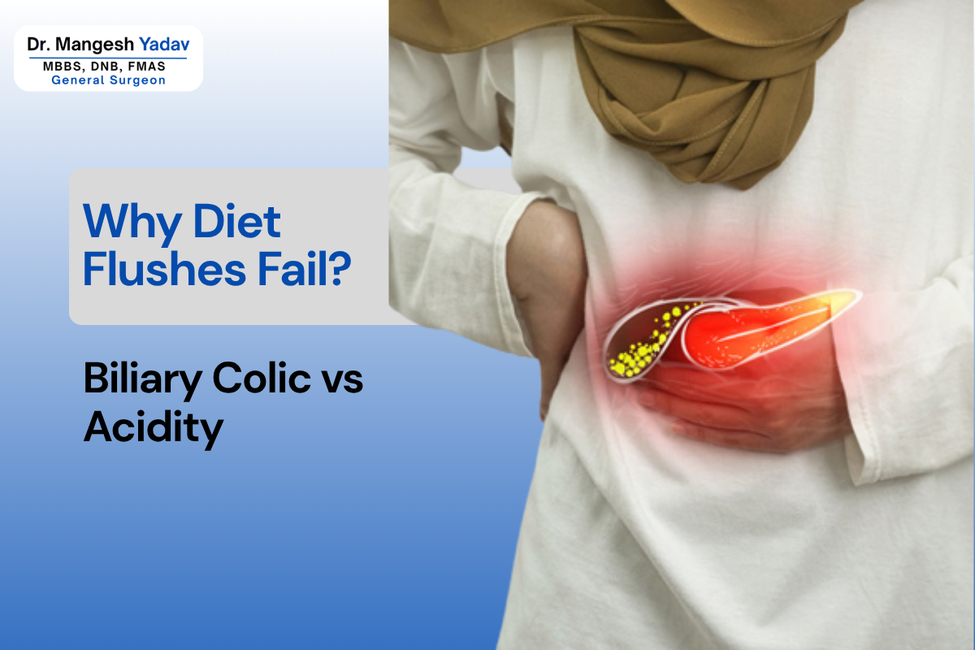
Why Medical Specialists Reject Diet Flushes and Posture Changes for Permanent Gallstones Treatment in Pune
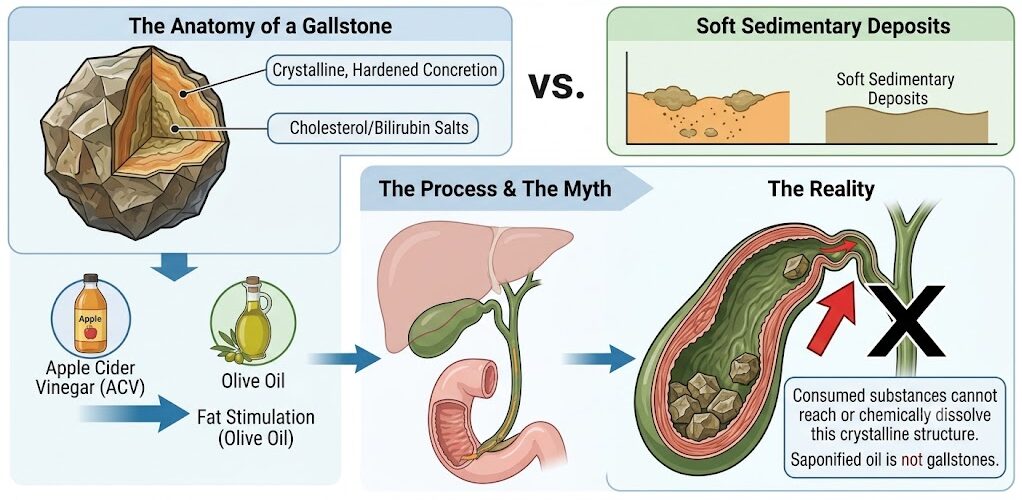
No dietary protocol, postural adjustment, or herbal supplement has ever been clinically proven to permanently dissolve or eliminate gallstones — and attempting these approaches delays the only treatment that actually works. This is not a matter of opinion. It is the consensus position of every major gastroenterological and surgical society worldwide.
Understanding why requires understanding what gallstones actually are at a structural level.
The Anatomy of a Gallstone — Why It Cannot Be Dissolved
Gallstones are not soft deposits that can be loosened with acidic drinks or flushed away with olive oil. They are crystalline, hardened concretions — either composed of cholesterol crystals that have slowly precipitated out of supersaturated bile, or bilirubin calcium salts that form when red blood cell breakdown products accumulate in bile.
Cholesterol gallstones — which account for approximately 80% of all cases — develop over months or years as bile becomes increasingly supersaturated with cholesterol. The gallbladder wall loses its ability to prevent crystallisation, cholesterol precipitates, and micro-crystals aggregate into macroscopic stones with a hard crystalline structure.
This structure cannot be dissolved by apple cider vinegar, lemon juice, olive oil, or any available oral supplement. The gallbladder is not a reservoir connected to the digestive system in a way that allows any consumed substance to reach and chemically dissolve gallstone material.
Why the Famous “Liver Flush” Is Medically Unsound
The so-called olive oil and lemon juice liver flush — which claims to produce passed gallstones in the stool — has been studied clinically. What patients observe in their stool after this procedure are not gallstones. They are saponified oil globules — blobs of fat that solidify when olive oil reacts with digestive secretions. No actual gallstone material is eliminated. The ultrasound after a liver flush invariably shows the original stones exactly where they were.
Meanwhile, the large volume of olive oil consumed during a flush can trigger biliary colic — causing a painful attack by stimulating vigorous gallbladder contraction against a stone-obstructed duct.
What About Ursodiol (UDCA) Medication?
Ursodeoxycholic acid (ursodiol) is the only medication with any genuine clinical evidence for gallstone dissolution. It works only for:
- Small (under 5mm) cholesterol stones
- Patients with a functioning gallbladder
- Non-calcified stones confirmed on CT scan
- Patients who are not surgical candidates for medical reasons
Even in this narrow eligible group, dissolution takes 6–24 months, complete dissolution occurs in only 30–50% of cases, and recurrence after stopping medication is common — up to 50% within 5 years. For the overwhelming majority of patients seeking gallstone treatment, ursodiol is not a practical or permanent solution.
According to Mayo Clinic, laparoscopic cholecystectomy is the definitive treatment for symptomatic gallstones — recommended over medical dissolution therapy for virtually all patients who are suitable surgical candidates.
For a detailed breakdown of what is included in gallbladder surgery packages and costs, read our complete guide: Gallbladder Removal Surgery Cost in Pune.
How Surgeons Identify Acute Biliary Colic vs Normal Gastric Acidity in Gallstones Treatment in Pune
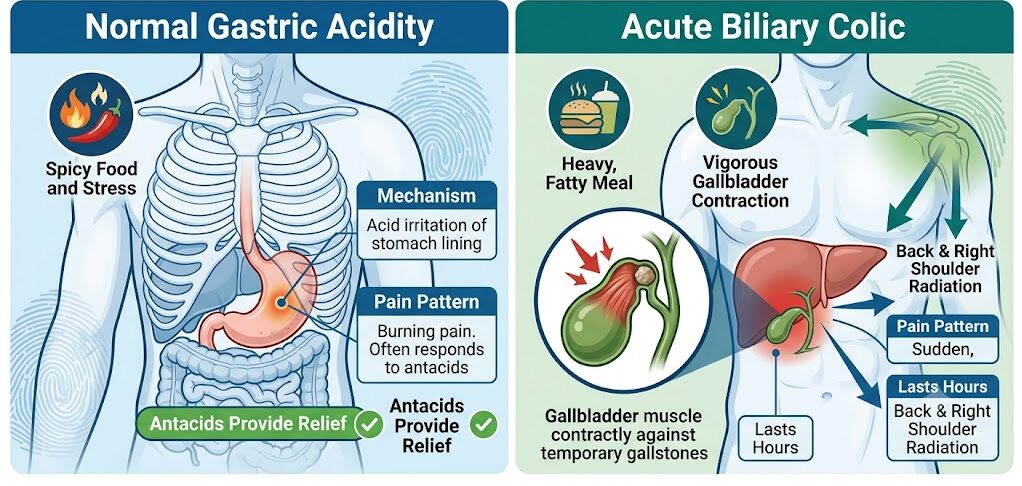
Biliary colic and gastric acidity produce abdominal discomfort through completely different mechanisms — and confusing the two is the most common reason patients delay seeking proper Gallstones Treatment in Pune for months or years. The distinction, once understood, is actually quite clear.
The Clinical Fingerprint of Biliary Colic
Biliary colic occurs when a gallstone temporarily obstructs the cystic duct — the tube through which bile exits the gallbladder. The gallbladder contracts forcefully against this obstruction, generating intense, cramping pain. This is the hallmark attack pattern:
Location: Upper right quadrant of the abdomen (under the right rib cage) or epigastric region (centre of the upper abdomen)
Radiation: Frequently radiates to the right shoulder blade or between the shoulder blades — a pattern that often sends patients to an orthopaedic doctor before a gastroenterologist
Trigger: Almost invariably precipitated by a fatty, fried, or heavy meal — because fat in the small intestine triggers cholecystokinin release, which stimulates gallbladder contraction
Duration: Builds over 15–30 minutes, peaks at intense severity, and lasts 30 minutes to 6 hours before gradually subsiding as the stone dislodges from the duct
Associated features: Nausea, vomiting, and sweating during the attack. No fever unless the stone remains lodged (which signals progression to cholecystitis)
Response to treatment: Antacids provide zero relief. The pain does not respond to positional changes. Only strong analgesics or antispasmodics provide partial relief during an attack.
How This Differs From Gastric Acidity
| Feature | Biliary Colic | Gastric Acidity |
|---|---|---|
| Location | Upper right / centre | Upper centre / chest |
| Radiation | Right shoulder blade | Sometimes chest, throat |
| Trigger | Fatty meal specifically | Spicy food, empty stomach, stress |
| Duration | 30 mins to 6 hours | Variable, often constant |
| Antacid response | None | Significant improvement |
| Vomiting | Yes, during attack | Sometimes |
| Fever | No (unless cholecystitis) | Never |
| Ultrasound finding | Gallstones visible | Normal gallbladder |
The Diagnostic Process at Vishwaraj Hospital
When a patient presents with suspected biliary colic, Dr. Mangesh Yadav conducts a systematic evaluation:
- Clinical history: Pain character, location, radiation, duration, and dietary triggers
- Physical examination: Murphy’s sign — deep inspiration during palpation of the right upper quadrant reproduces pain in cholecystitis
- Ultrasound abdomen: First-line investigation — detects gallstones with 95% sensitivity, identifies gallbladder wall thickening, and assesses bile duct diameter
- Liver function tests (LFT): Elevated bilirubin, ALP, or GGT suggests bile duct involvement
- MRCP (Magnetic Resonance Cholangiopancreatography): Used when common bile duct stones are suspected to provide detailed ductal imaging before surgery
In most cases, diagnosis is confirmed within one consultation and one ultrasound. There is no prolonged investigation period — clarity comes quickly, and the surgical plan follows.
What Are the Risk Parameters of Completely Delaying Laparoscopic Gallbladder Removal Surgery for Gallstones Treatment in Pune?
Delaying laparoscopic cholecystectomy after symptomatic gallstones are diagnosed converts a planned 45-minute elective procedure into a potentially life-threatening emergency — with significantly higher surgical risk, longer hospital stay, and greater complication rates. This is the central clinical argument against watchful waiting for symptomatic gallstone disease.
The risks of delay are not theoretical. They are well-documented, progressive, and time-dependent.
Risk 1 — Acute Cholecystitis
The most common complication of delayed gallstone surgery. When a gallstone becomes permanently lodged in the cystic duct, the trapped bile becomes infected and the gallbladder wall becomes acutely inflamed.
Clinical picture: Severe, constant right upper quadrant pain (unlike the episodic nature of biliary colic), fever of 38–39°C, elevated white cell count, and a positive Murphy’s sign.
Surgical consequence: Emergency laparoscopic cholecystectomy in acute cholecystitis carries a significantly higher conversion rate to open surgery (10–15% vs under 5% in elective cases), greater blood loss, longer operative time, and higher complication rates including bile duct injury.
Risk 2 — Choledocholithiasis (Bile Duct Stones)
Gallstones can migrate from the gallbladder into the common bile duct — the main channel carrying bile from the liver to the small intestine. A stone in the common bile duct blocks the entire biliary system.
Clinical consequence: Obstructive jaundice — yellowing of the skin and eyes, dark urine, pale stools, and intense itching. This requires ERCP (endoscopic retrograde cholangiopancreatography) to remove the duct stone before or during surgery, significantly increasing the complexity and cost of treatment.
Risk 3 — Acute Pancreatitis
Gallstone pancreatitis occurs when a migrating stone temporarily blocks the pancreatic duct at the ampulla of Vater. Digestive enzymes back up into the pancreas and begin digesting the organ itself.
Clinical severity: Acute pancreatitis ranges from mild (managed conservatively with IV fluids and fasting) to severe necrotising pancreatitis — which carries a mortality rate of 20–30% and requires ICU management, sometimes for weeks.
This is the most feared complication of delayed gallstone surgery — and it is entirely preventable with timely elective cholecystectomy.
Risk 4 — Gallbladder Empyema and Perforation
In advanced acute cholecystitis, the gallbladder fills with pus (empyema) and can perforate — spilling infected bile into the abdominal cavity. This causes generalised peritonitis and sepsis requiring emergency surgery with ICU admission.
The Cost of Delay — Elective vs Emergency Surgery
| Elective Laparoscopic Surgery | Emergency Surgery (After Complication) | |
|---|---|---|
| Procedure time | 45–60 minutes | 90–180 minutes |
| Hospital stay | 1–2 days | 5–14 days |
| Complication risk | Under 2% | 15–25% |
| Open surgery conversion | Under 5% | 10–20% |
| Recovery time | 3–5 days (desk work) | 4–8 weeks |
| Total cost | ₹40,000–₹1,20,000 | ₹1,50,000–₹5,00,000+ |
The National Institutes of Health (NIH) confirms that early elective laparoscopic cholecystectomy for symptomatic gallstones is associated with lower morbidity, shorter hospital stay, and better patient outcomes than delayed surgery after complications develop.
For patients who also experience abdominal pain, lumps, or related gastrointestinal symptoms alongside gallstone disease, our comprehensive page on Gastrointestinal Surgical Conditions provides valuable additional information.
Gallstones Treatment Cost in Pune — Transparent Breakdown
| Component | Approximate Cost |
|---|---|
| Consultation & Diagnosis | ₹200 – ₹500 |
| Ultrasound Abdomen | ₹800 – ₹2,000 |
| Pre-Op Blood Tests (LFT, CBC) | ₹1,500 – ₹3,000 |
| Laparoscopic Cholecystectomy (all-inclusive) | ₹40,000 – ₹1,20,000 |
| Hospital Stay (1–2 nights) | Included in package |
| Post-Discharge Medicines & Follow-Up | ₹1,000 – ₹2,500 |
Package includes: Anaesthesia, laparoscopic procedure, hospital stay, nursing, meals, and one follow-up. Zero hidden charges.
Insurance: Gallbladder removal surgery is covered under most Mediclaim, family floater, corporate insurance, CGHS, and Ayushman Bharat policies. Cashless treatment available at Vishwaraj Hospital. EMI available.
About Dr. Mangesh Yadav — Gallstones Specialist in Pune
Dr. Mangesh Yadav is a General, Laparoscopic & Robotic Surgeon with over 15 years of surgical experience at Vishwaraj Hospital, Pune Solapur Road, Loni Kalbhor, Pune. He has performed over 3,000 laparoscopic cholecystectomies — making him one of the most experienced gallstone surgeons in Pune.
Qualifications: MBBS, DNB, FMAS Specialisation: Laparoscopic cholecystectomy, robotic surgery (SSI Mantra 3.0), general and gastrointestinal surgery Track Record: 3,000+ gallbladder surgeries | 5,000+ hernia surgeries | 6,000+ anorectal procedures
OPD: Mon–Sat: 3:00–5:00 PM & 7:00–8:30 PM | Sun: 10:30 AM–1:00 PM Appointment: +91-8220131599 | +91-9653331571
Why Choose Dr. Mangesh Yadav for Gallstones Treatment in Pune?
1. 3,000+ Cholecystectomies — Depth of Experience Volume and experience define laparoscopic surgical outcomes. Dr. Yadav manages routine and complex cases — including acute cholecystitis, bile duct stones, and post-complication salvage surgery.
2. Laparoscopic-First, Always Every suitable patient receives laparoscopic surgery — the most advanced and least invasive option — never open surgery unless medically unavoidable.
3. Honest Clinical Assessment Not every silent gallstone needs immediate surgery. Dr. Yadav provides an evidence-based recommendation — surgery when warranted, monitoring when appropriate. You receive clinical honesty, not sales pressure.
4. Same-Day or Next-Day Discharge No extended hospital stays. You are home within 24–48 hours and back to your desk within 3–5 days.
5. What Makes Us Different Most clinics offer gallbladder surgery. Dr. Mangesh Yadav offers 15+ years of focused laparoscopic expertise, robotic-grade technology at Vishwaraj Hospital, complete cost transparency, and the clinical knowledge to distinguish between patients who need surgery now and those who can safely be monitored. That distinction — made accurately — is what saves patients from both unnecessary operations and preventable emergencies.
Frequently Asked Questions
I have gallstones but no pain at all. Do I need surgery?
Silent gallstones carry a low but real annual risk of complications. Most surgical guidelines recommend monitoring for asymptomatic stones with regular ultrasounds. However, surgery is advised for patients with a high-risk gallbladder (large stones, porcelain gallbladder, or immunocompromised status), those planning to travel long-term, or those with diabetes. Dr. Yadav will advise specifically for your case.
Can I permanently manage gallstones with diet alone?
Diet management reduces the frequency of biliary colic attacks by limiting fatty food — but it does not eliminate the stones. The stones remain, the risk of complications persists, and any fatty meal can still trigger an attack. Diet is a temporary bridge, not a permanent solution.
Is laparoscopic gallbladder surgery risky?
Laparoscopic cholecystectomy is one of the most commonly performed and safest elective surgeries worldwide. Serious complications are rare — under 2% in elective cases with an experienced surgeon. The risk of NOT treating symptomatic gallstones is far higher than the risk of planned laparoscopic surgery.
Will I need to follow a special diet forever after gallbladder removal?
No. Dietary restrictions are temporary — mainly the first 2–4 weeks while the liver adjusts to delivering bile directly to the small intestine without gallbladder storage. Most patients eat a completely normal diet within 4–6 weeks of surgery.
How long does laparoscopic gallbladder surgery take?
45–60 minutes for uncomplicated cases. Acute cholecystitis or bile duct involvement may extend operative time. You are in recovery within 90 minutes of entering the operating theatre.
Can gallstones form again after gallbladder removal?
No. Once the gallbladder is removed, new gallstones cannot form in the gallbladder — it no longer exists. Extremely rarely, stones can form in the bile duct itself (primary choledocholithiasis), but this is entirely unrelated to the original gallbladder disease.
What is the difference between acute cholecystitis and biliary colic?
Biliary colic is intermittent pain caused by a stone temporarily blocking the cystic duct — it resolves when the stone dislodges. Acute cholecystitis occurs when the stone remains lodged, the gallbladder becomes inflamed and infected, and fever develops. Cholecystitis is a surgical emergency; biliary colic is urgent but not immediately life-threatening.
How soon can I return to work after gallbladder surgery?
Desk and office workers return within 3–5 days. Physically demanding jobs require 2–3 weeks. This is dramatically faster than open surgery, which requires 4–6 weeks of recovery.
Is gallbladder surgery covered by insurance in Pune?
Yes. Laparoscopic cholecystectomy is covered by most individual and corporate Mediclaim policies, CGHS, and Ayushman Bharat. Cashless treatment is available at Vishwaraj Hospital — the billing team manages all insurer coordination.
Silent Gallstones Deserve an Expert Opinion, Not Hopeful Waiting
Silent gallstones are not harmless because they do not hurt. They are dormant. The difference between a silent stone and an emergency is often a single fatty meal, a bout of stress, or the gradual migration of a stone toward a duct. Gallstones Treatment in Pune — planned elective laparoscopic surgery gives you complete control over that outcome.
Do not wait for a crisis. Get clarity now.
Book your private consultation with Dr. Mangesh Yadav at Vishwaraj Hospital today. One ultrasound. One honest surgical opinion. One decision that protects your health permanently.
Vishwaraj Hospital, Pune Solapur Road, Loni Kalbhor, Pune 412201 +91-8220131599 | +91-9653331571
Need Help? We’ve Got You Covered
Contact Details
Clinic Address
153, Magarpatta Rd, Magarpatta, Hadapsar, Pune
Monday To Saturday: 03.00 PM to 05.00 PM / 07.00 PM to 08.30 PM
Sunday: 10.30 AM to 01.00 PM